Zinfandel & Co.
Grape Varieties
No county in California grows as many different varieties in earnest as Sonoma, and that's down to the temperature differences between its valleys. In the west, where Pacific fog rolls through, Pinot Noir and Chardonnay ripen. In the east, where the Mayacamas Mountains hold the cool air back, Cabernet Sauvignon ripens. In between lies Zinfandel, the variety with the longest history here of all.
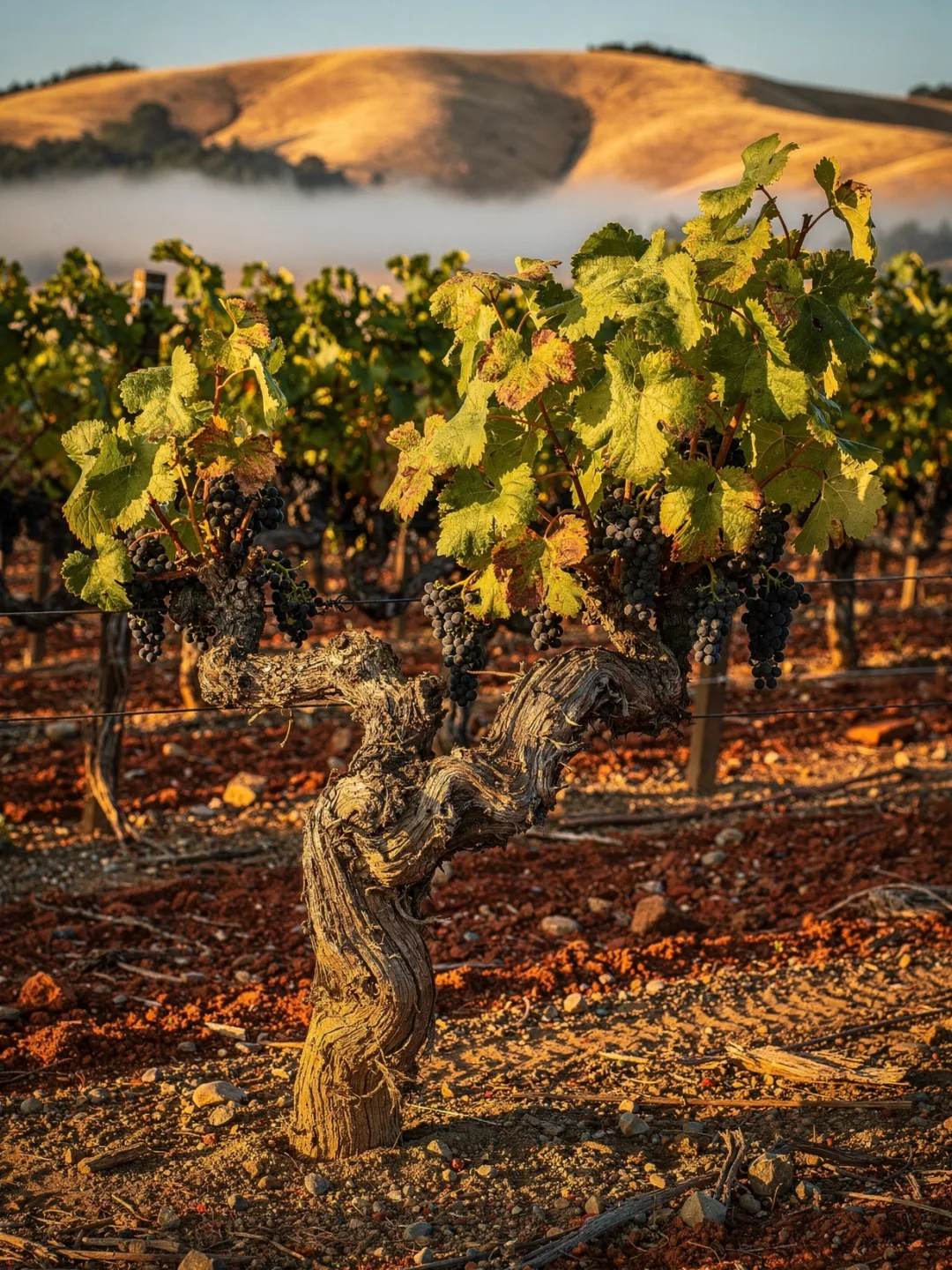
Zinfandel's deepest roots lie in Dry Creek Valley, a narrow side valley northwest of Healdsburg. The Frenchman Georges Bloch planted the first Zinfandel vines here in the 1870s. Within a few decades, the variety covered roughly 360 hectares of the valley. Some of those vines still stand today, over a hundred years old, deep-rooted, with tiny yields but dense, spicy wine. Here, age pays off.
In Russian River Valley, fog determines the character of the wine. The river itself acts like a channel for cool ocean air, which travels from the coast at Jenner far inland and often lingers there well into the afternoon. In this cool, damp climate, Pinot Noir plantings grew from around 1,600 to over 4,800 hectares between the late 1990s and 2003. In German, this variety is called Spätburgunder, and anyone who knows it will recognize it instantly in the glass.
Alexander Valley, which follows the Russian River from the Mendocino county line to Healdsburg, looks entirely different. Millennia of shifting river bends left deep gravel beneath the topsoil, not unlike the finest terroirs of Bordeaux. On these warm, well-drained soils, Cabernet Sauvignon ripens reliably. No other variety defines the valley quite like it.