Barley and EU law
Grain
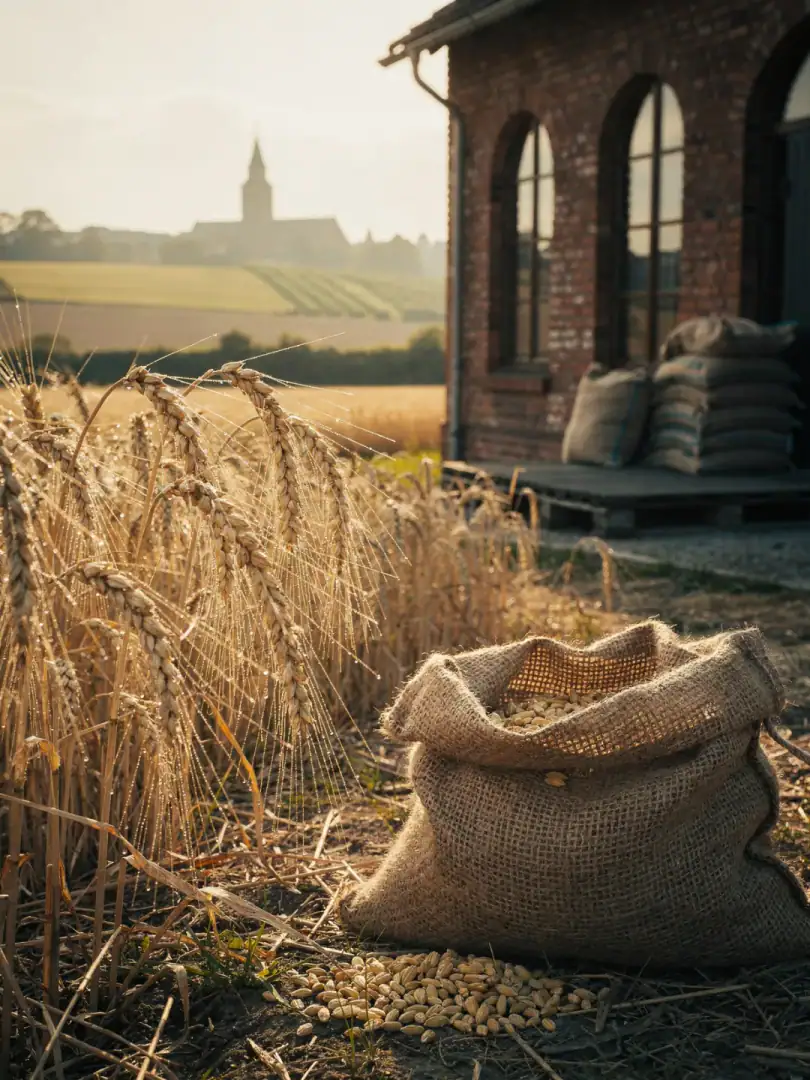
In the silos of Slyrs and St. Kilian lies mostly barley. It's the same ingredient found in every kettle of Helles or wheat beer. It's typically grown as spring barley in the fields of Lower and Upper Franconia. These fields often lie just a few kilometers from the malthouses that later process them. Slyrs and St. Kilian source their malt from, among others, Franconian houses like Weyermann in Bamberg. The malthouse has been producing malt for breweries worldwide since 1879, passing its craft on to the whisky distillers next door as well.
EU Regulation 2019/787 sets the same basic rule for whisky from every member state. The mash must come from grain, be fermented, and be distilled below 94.8% ABV. It then must mature for at least three years in wooden casks of up to 700 liters, bottled at a minimum of 40% ABV. There's no separate German whisky law like Scotland's 2009 regulation. So Bavaria distills under the same rules as any other EU whisky region, just with different grain in the kettle.
Only those who use one hundred percent malted barley, work with pot stills, and distill at a single distillery may call their result Single Malt. It was exactly this label that Fleischmann carried in 1983 as the first in Germany. Anyone who instead adds unmalted grain or blends several types of grain ends up, depending on the method, with a grain whisky or a blended whisky. The regulation explicitly permits this too.
During mashing, the crushed malt is doused with hot water. The enzymes released in the malt break down the starch into fermentable sugar, and within a few days yeast turns it into alcohol. Bavarian barley behaves the same way it does anywhere else. In the end, it's less the grain and more what happens after distillation, the water, the cask, and the Bavarian climate, that makes the difference.