The short answer
Whisky is a spirit, meaning a distilled drink with a high alcohol content. The raw material is grain. It's fermented, then distilled, and usually aged in oak casks. The rules for this differ depending on origin and category.
From grain to glass
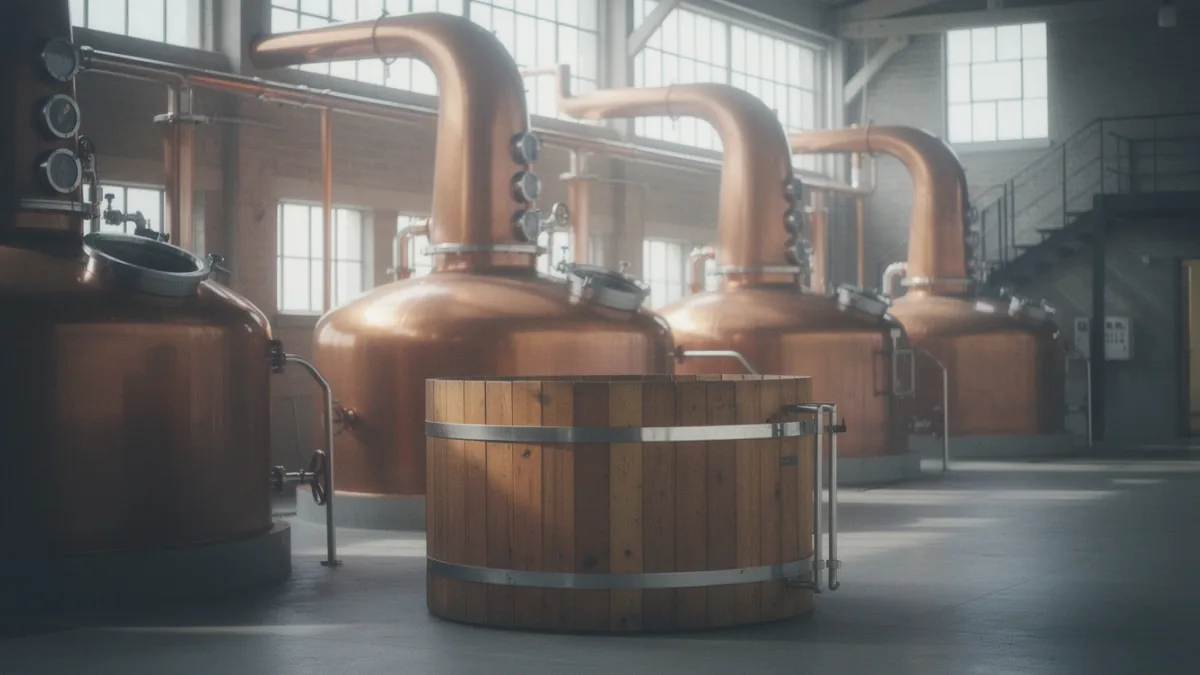
It starts with grain. Yeast turns it into alcohol; this step is called fermentation. During distilling, the alcohol is concentrated. After that, cask aging changes the character. Scotch comes from Scotland, and its rules don't automatically apply unchanged to every other origin.
The order matters for understanding this. First, the grain's starch has to be converted into sugar, otherwise the yeast has nothing to work with. Only then does an alcoholic liquid emerge that can actually be distilled. During distillation, not just alcohol collects, but also some of the aromas from fermentation. Whatever ends up in the bottle carries traces from every one of these steps.
Cask aging is more than simply waiting it out. The wood releases its own aromas while also transforming what the distillate brings with it. That's why two bottlings made from the same grain can taste very different. And that's why it's worth looking at the origin: what applies to Scotch is a Scottish rule, not a worldwide definition of whisky.
What to look for on the label
Look for the full category, the origin, and the ABV. A big brand logo tells you less than these three pieces of information. An age statement can help additionally, but it doesn't replace a description of the style.
On a first purchase, I'd ask whether the bottling is smoky, fruit-forward, or strongly shaped by wood. That gives you an expectation you can test. If you change only one characteristic in your next comparison, you get to know your own taste. An ever-growing list of distillery names, on the other hand, barely gets you anywhere.
You notice the ABV fastest of all. It says nothing about quality, but a lot about the punch in the glass. It determines how concentrated the sweetness, smoke, or wood come across. Category and origin narrow down what to expect. The strength tells you how loudly it's delivered. Both details usually sit in small print next to the eye-catching part of the label.
Get in the habit of jotting down, at the point of purchase: bottling name, origin, strength. After three or four bottles, you'll start recognizing patterns that match your taste. Without notes, often all that's left from a tasting is the memory that something was good. Why it was good, you won't remember anymore.
What doesn't define whisky
A high age statement is not a tasting note. It describes time spent in the cask, not quality. Long aging can emphasize a style, but it can just as easily bury it. If you like bold fruit, a younger bottling might actually be closer to your taste than an old one heavy with wood. The age statement complements the style description, but it can't replace it.
Equally widespread is the assumption that the same rules apply to all whisky. What's required for the raw material, distillation, and cask aging depends on origin and category. Anyone who applies rules from Scotland to a bottle from a different country will later be puzzled by the differences. Those differences are already written into the respective regulations.
How to compare at home
Set two bottles side by side that differ in exactly one point, say smoky versus fruit-forward at a similar ABV. Two or three sips per glass are plenty. Nose both before tasting, and switch back and forth several times afterward. In a direct comparison, the differences stand out clearly. On separate evenings, you'd hardly be able to tell the same whiskies apart.
Record the result in simple words: what you liked, what was too much, what was missing. Notes like these are more useful for your next purchase than any best-of list, because they describe your own expectations. Over time, you'll start asking for exactly that in the shop. You'll no longer be dependent on label design and well-known names.