Springs, rock, foehn wind
Water & Climate
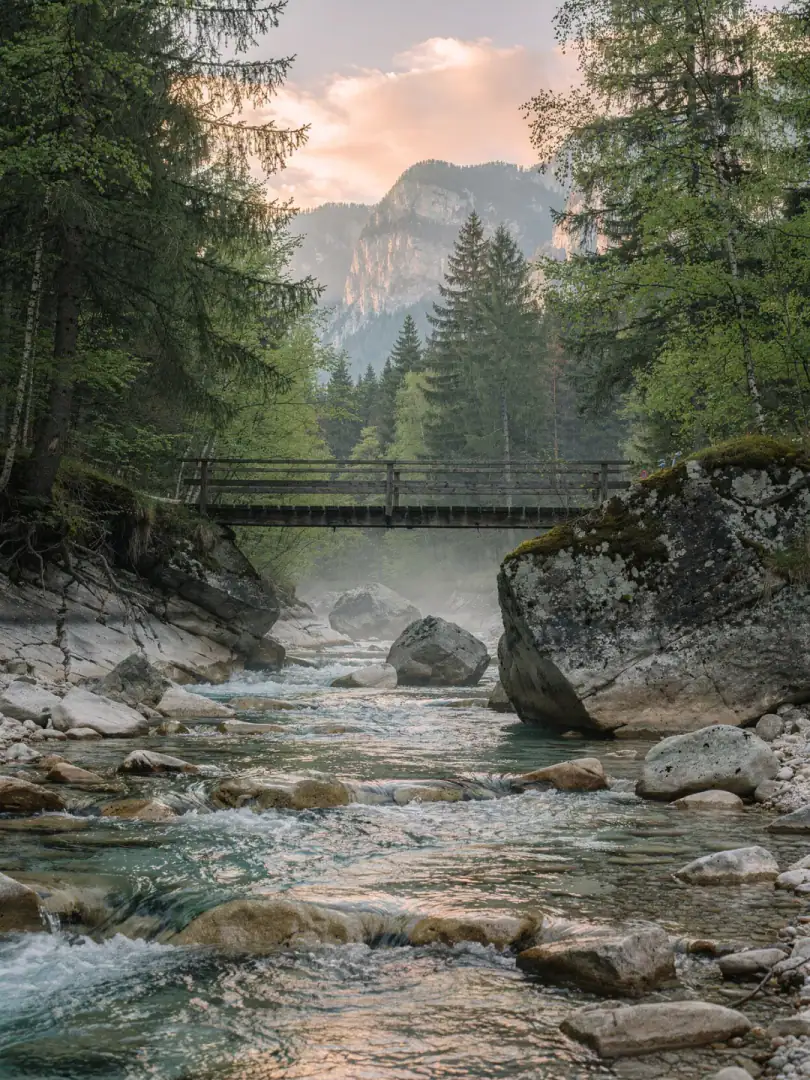
Anyone working in Neuhaus am Schliersee doesn't have to search far for water. The lake sits at over 780 meters and is fed by streams that seep through Nagelfluh, a coarse conglomerate rock. This rock runs through large parts of the Bavarian Alps and their foothills. The water emerges cool and low in minerals from the rock before it goes into the mash and dilution.
In the Spessart, where St. Kilian distills in Rüdenau on the Main, red sandstone lies beneath the forest floor. This red rock keeps the water soft and slightly acidic. For centuries, it has also made the Spessart a source of wood for wine casks. To this day, cask staves are cut from these same forests for winemakers along the Rhine and the Main.
Around Eggolsheim and Franconian Switzerland, where Fleischmann has been distilling since 1983, limestone from the White Jura shapes the landscape. The terrain is riddled with caves and karst springs. This very water has also supplied Franconia's dense brewing scene for centuries.
Climate-wise, the Bavarian distilleries sit at two different ends of the spectrum. Around Schliersee, an alpine climate brings snow well into spring, along with the warm foehn wind, which can cause double-digit temperature swings within hours. In the Main Valley around Rüdenau and in Franconian Switzerland, by contrast, Franconia's drier, more continental climate brings hotter summers. Both ultimately shape how the water tastes before it's even distilled.
Still, one thing unites both regions: neither knows a shortage of water. Whether alpine stream or karst spring, Bavaria has plenty of cool, clean water to supply every distillery year-round. No distillery here has ever had to complain about drought.