Calm in the Cask
Cask & Maturation
Mark Reynier, the founder of Waterford, was a wine merchant before he ever became a distiller, and it shows in his warehouse. Alongside bourbon casks, Waterford ages a notably large number of former wine casks, from French red wine to Austrian dessert wine. The idea behind it is the same as with the barley. Each cask is meant to carry forward its own origin, becoming more than just wood.
At Midleton, by contrast, the majority of casks are classic bourbon barrels. Sherry casks complement them, especially for the Spot and Redbreast lines. The huge warehouses surrounding the distillery hold hundreds of thousands of casks between them. Their numbers keep growing with every new vintage, ever since the old distillery made way for the new one in 1975.
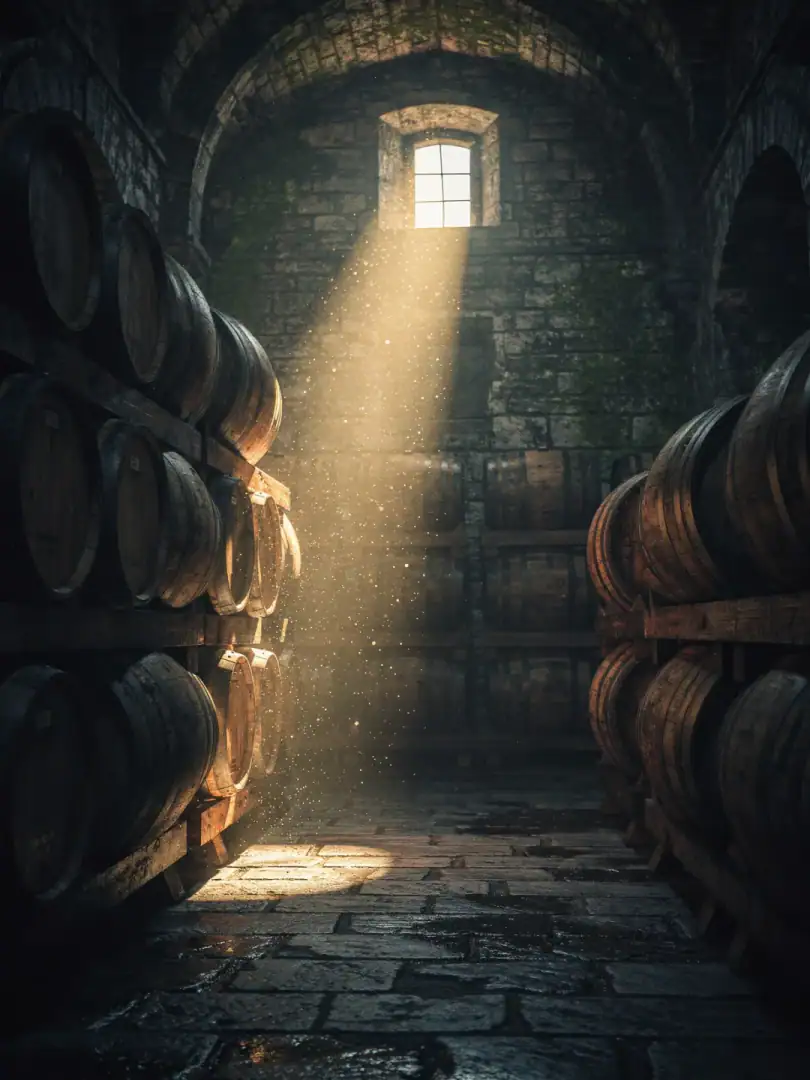
How hard a cask works also depends on where it sits. In coastal warehouses, such as West Cork's in Skibbereen or Blackwater's in Cappoquin, damp sea air hangs constantly over the casks. This steady humidity is one of the reasons whiskey from the south of Ireland is so often described as especially smooth. That reputation already applied to the historic pot still from Midleton.
In the end, the same rule applies to every distillery in the south. The cask is never a neutral vessel, but the second author of the whiskey. Whether bourbon, sherry or wine: what goes in shapes how the finished pot still or single malt from Cork and Munster ultimately tastes. That holds true for every cask in the warehouse.