No Smoke
Malt & Peat
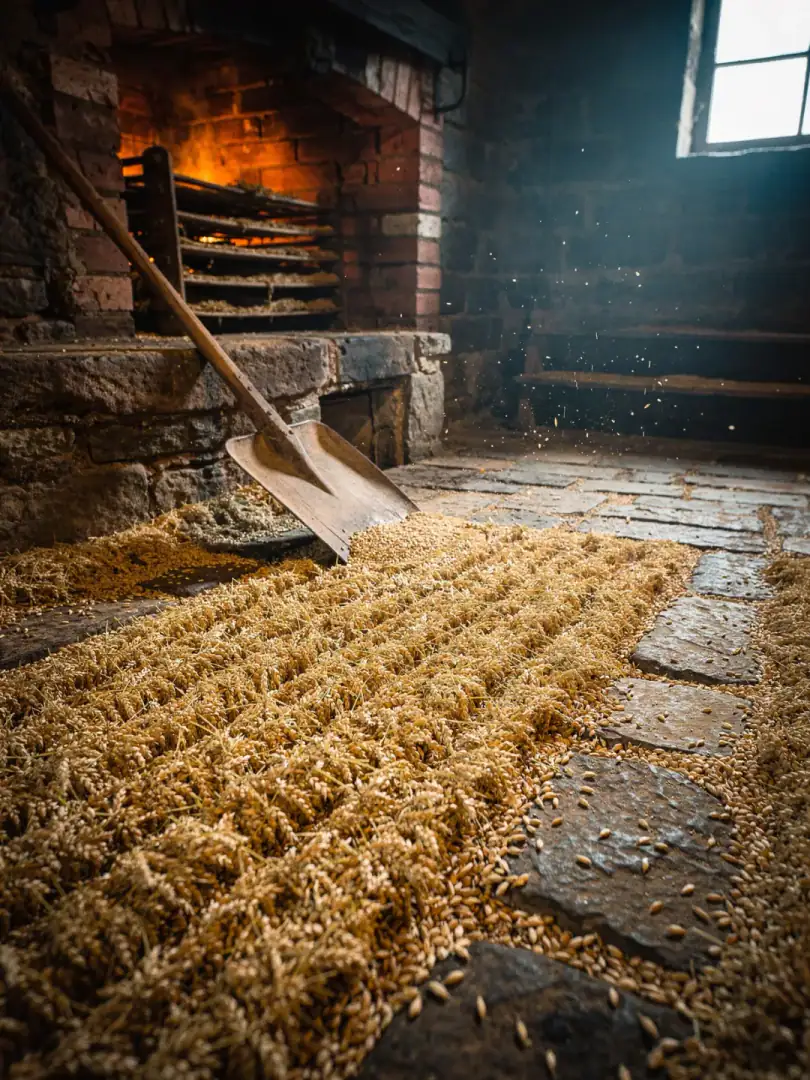
Peat is largely absent from whiskeys made in Cork and Munster, and the reason is simple. Irish malthouses traditionally dried their barley in enclosed kilns using hot air, not over an open peat fire as on Islay. The smoke that gives Scotch malt its smoky edge is entirely missing from the still at Midleton.
This wasn't purely coincidence – it was also a matter of what was available. Munster lacks the vast peat bogs found further west and north in Ireland. The landscape around Cork and Waterford is farmland, not bog. Cutting peat here would hardly have been worth the effort. Coal, and later gas, were readily available for the kilns instead.
In the end, what's missing is also a statement of intent. Where Islay celebrates its smoke, the south of Ireland celebrates pure barley. Its flavour is meant to remain uncovered, by neither peat nor heavy toasting in the cask. That clarity is a style in its own right, even if it's harder to describe than a clear smoky note.
Beneath the barley itself lies another story. The soils around Midleton, Cork and the farmland toward Tipperary belong to the so-called Golden Vale, one of the most fertile regions in Ireland. Dark topsoil sits here over dense, glacier-formed clay, with limestone beneath supporting much of Munster. This ground has supplied the barley from which Midleton and its younger neighbours distil their whiskey for centuries.
Dark, humus-rich earth built up over centuries of grazing and farming.
The root: It feeds the barley evenly, supporting steady growth without stress.