Grain and Tax
Grain
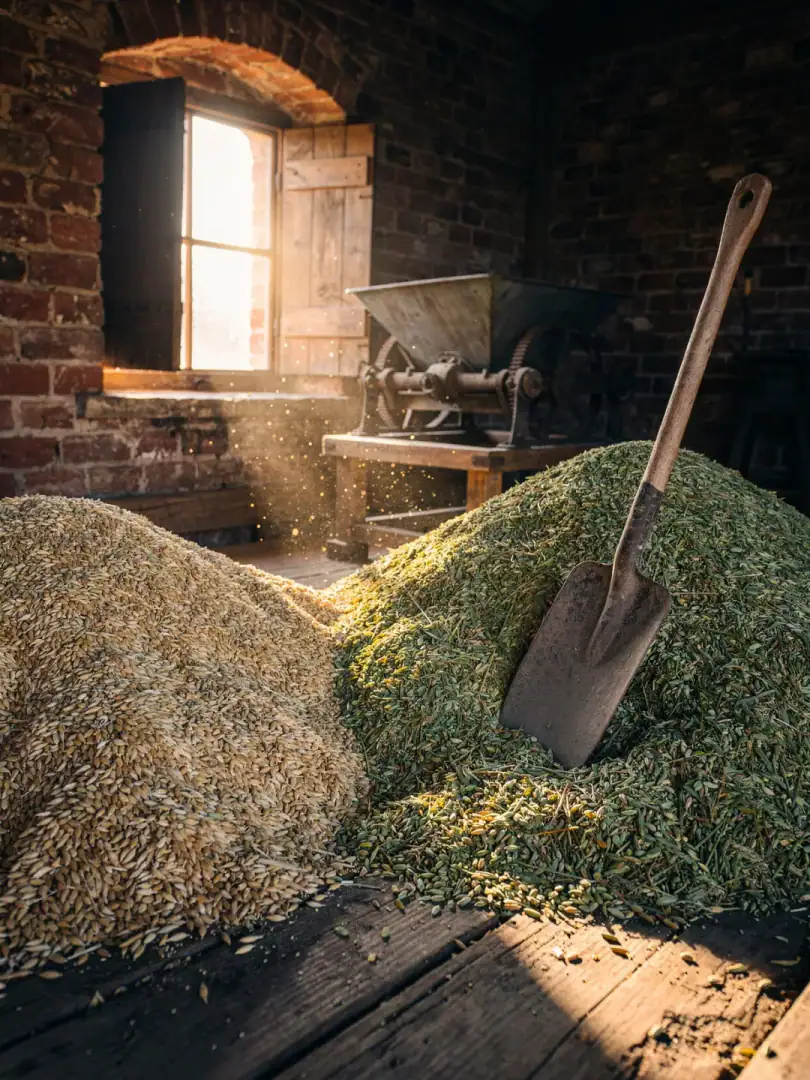
A British tax law from 1785 unintentionally created Ireland's most distinctive whiskey style. Malted barley was taxed more heavily than unmalted, and Dublin's distillers responded pragmatically: they blended in a portion of raw, "green" barley with their malt. What began as tax avoidance became a style with real character.
Today the 2014 Technical File spells it out precisely: Single Pot Still Whiskey requires at least 30 percent malted and at least 30 percent unmalted barley. Up to 5 percent may be other grains, such as oats, wheat, or rye. The malt is never smoked—the rules specifically call for unpeated malt.
The raw barley brings oil and protein into the mash. The malted barley supplies the enzymes that convert it all into sugar. The result tastes noticeably different from a pure malt: spicier, sometimes almost peppery. There's also an oily, creamy texture that lingers long on the palate.
Teeling in Newmarket uses a 50/50 split of malted and unmalted barley for its Single Pot Still. The spirit is triple distilled and matured in a mix of virgin American oak, bourbon, and sherry casks. Kilbeggan, out in the countryside, still keeps the style in its lineup too, with its old copper pot still serving as a link to traditional craftsmanship.
There's also pure Grain Whiskey made from maize, lighter and milder in character. It mostly ends up in blends like Tullamore D.E.W. This combination of pot still, malt, and grain is a Dublin invention that still shapes most Irish blends today. Pure grain bottlings without any blending, however, remain rare.