Canal, Not Coast
Water & Climate
Two rivers flow through the Liberties that you'd barely notice from the street. They are the Poddle and the Camac, both long since piped underground for much of their course. For centuries they powered mills and supplied the water that breweries like Guinness and the surrounding distilleries needed.
The water itself comes largely from the Wicklow Mountains south of the city. There, granite and peatland filter the rain before it makes its way into the city through streams and treatment plants. Soft and low in minerals, it suits mashing well without imposing any flavor of its own onto the whiskey. This purity mattered even to 19th-century distillers.
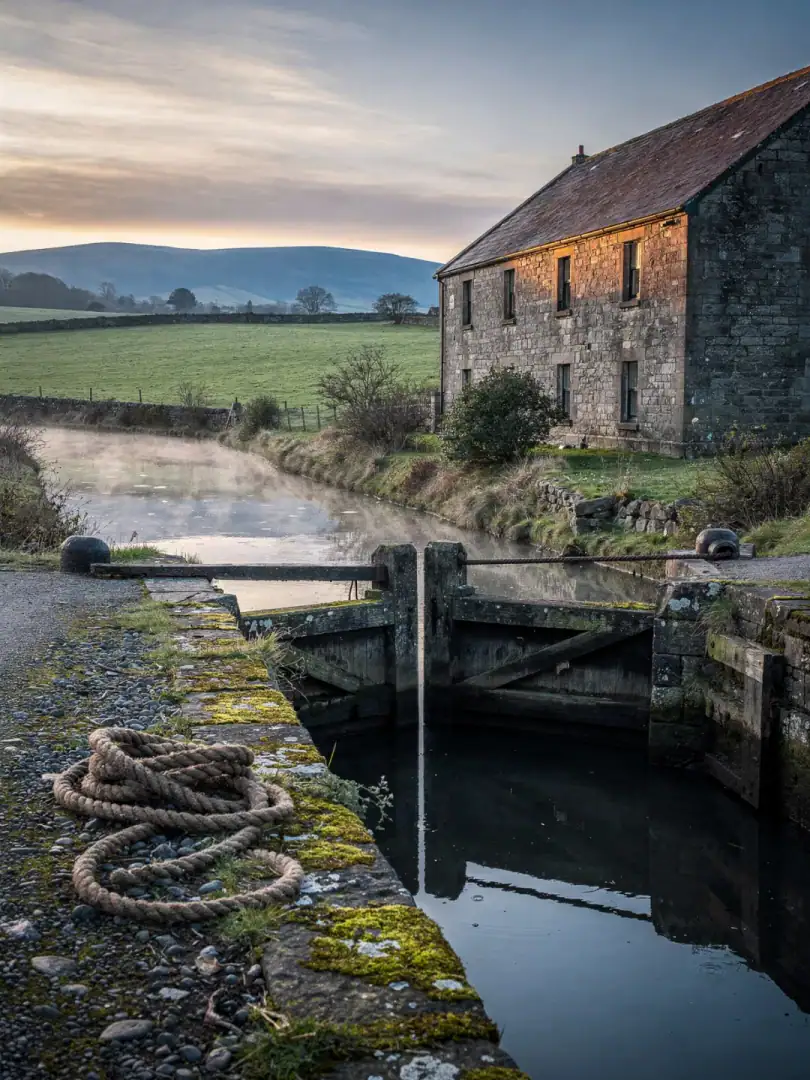
Inland, it was less about the water itself than about the canal surrounding it. The Grand Canal connected Dublin to the Shannon via the Brosna route, turning Tullamore into a trading hub. Grain came in, finished whiskey went out, and the distillery on the canal bank grew alongside the trade.
Kilbeggan sits directly on the River Brosna in County Westmeath. The river has supplied the distillery with cooling water since 1757, and once with water power too. Cooley, meanwhile, on the coast of the peninsula of the same name in County Louth, matures its whiskey in salty, humid sea air.
Ireland's climate is mild and damp, with smaller temperature swings than, say, Kentucky or Japan. This lets the cask breathe more calmly: the whiskey absorbs cask character more slowly, but more evenly. This happens over years rarely interrupted by frost or extreme heat.