Cold and Salty
Water & Climate
On Hokkaido, winter sets the calendar. Snow often blankets the island from November to April, piling up several meters deep in the mountains. Even the coastal towns regularly freeze below zero. For cask maturation, that means long cold stretches alternating with short, mild summers. As a result, the whisky matures more slowly than in Japan's hotter south.
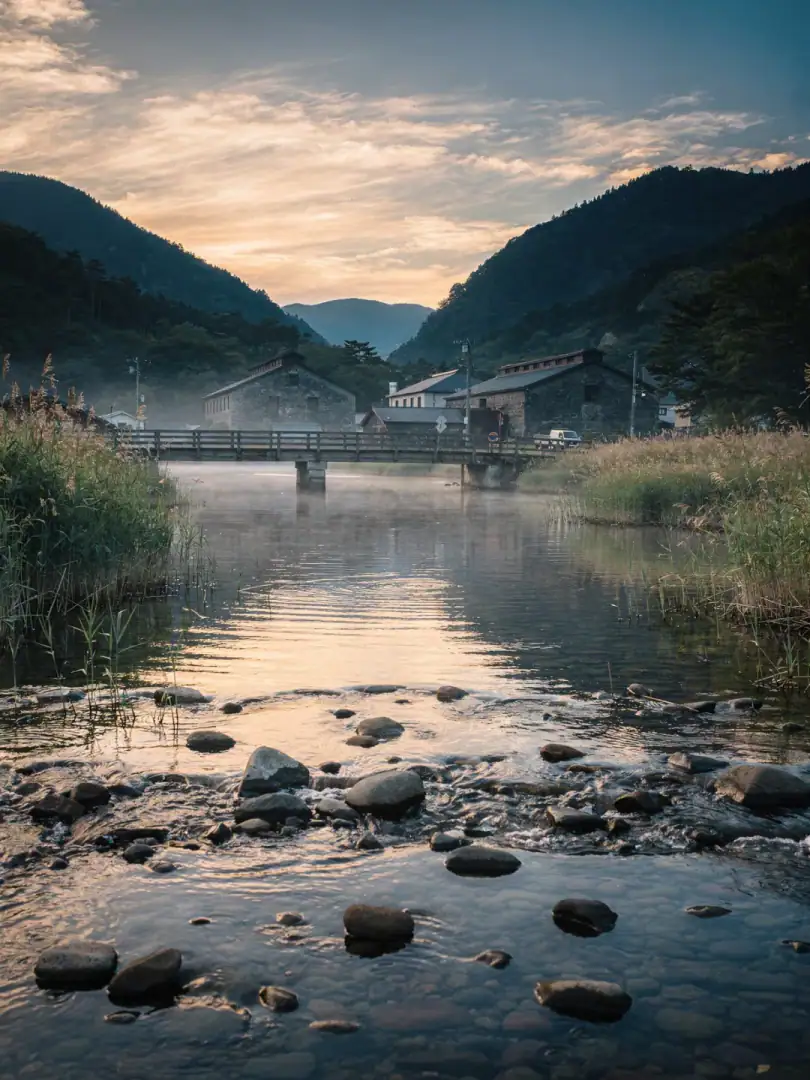
Yoichi sits at the foot of the Shakotan Peninsula, enclosed by mountains on three sides, facing the Sea of Japan. The Yoichi River runs right through town, carrying clean water down from the volcanic highlands. In autumn, salmon swim upstream through it, returning to spawn.
Wind off Ishikari Bay sweeps across the malting floors. Locals in Yoichi say it lends the malt a faint touch of the sea, long before the mash is even distilled.
Akkeshi sits on the opposite coast, facing the Pacific in the island's east, amid a landscape of bogs and wetlands. Dense fog rolls in off the sea almost year-round, damp and cool. It's reminiscent of Islay, the very model Kenten Jitsugyo set out to find.
In Higashikawa, further inland, the young Tankyu Distillery draws its water straight from springs at Asahidake, the tallest peak in the volcanic Daisetsuzan range. The water filters down through porous volcanic rock and emerges at the surface clean and low in minerals.
Two seas, one mountain range, one shared climate: cold and moisture shape every distillery on the island. Yet the Pacific coast and the Sea of Japan smell entirely different from one another.