Sake and Whisky
Region & History
In Koriyama, a family has been brewing sake since 1710, first on the shore of Lake Inawashiro, then from 1765 onward right in the middle of town. The company is called Sasanokawa Shuzo, and for nearly two centuries it had nothing to do with whisky.
That changed in 1946: as the first distillery in all of Tohoku, Sasanokawa was granted a whisky distilling license in the midst of the harsh postwar years. Even so, the company didn't become famous right away—that came only in the 1980s, with a "Cherry Whisky" made from imported Scotch and molasses. In northern Japan, everyone knew it as "the northern Cherry," a bestseller for years.
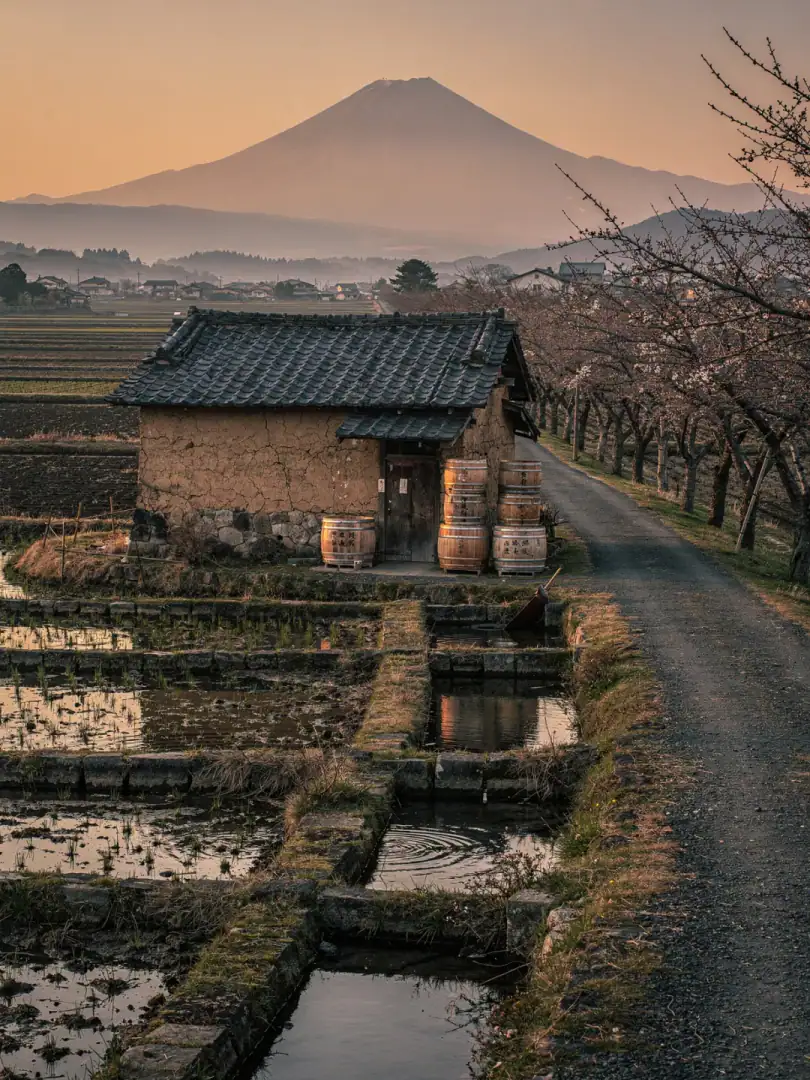
Genuine malt whisky came much later. In 2014, Sasanokawa introduced the Yamazakura line, named after the mountain, yama, and cherry blossom, sakura. Two years later, in the winter of 2016, the family converted a historic clay building into the Asaka Distillery to mark the company's 250th anniversary. The name comes from the plain on which Koriyama sits, the Asaka Plain.
While the sake family was renovating, Nikka had long since built in Miyagi. In 1969, Masataka Taketsuru had his second distillery constructed there, in a forested valley west of Sendai known as "Mori no Miyako," city of trees. He made the decision after tasting whisky made with water from the Nikkawa River. Yoichi on Hokkaido already existed by then; Miyagikyo was meant to bring a softer, different character.
Today both houses represent two different paths through the same region. Nikka has been filling warehouses for over fifty years, while Sasanokawa has only been distilling its own malt again for a few years. Between Sendai and Koriyama lies the whole spectrum of Japanese whisky, from the young family operation to the large corporation with its own history.