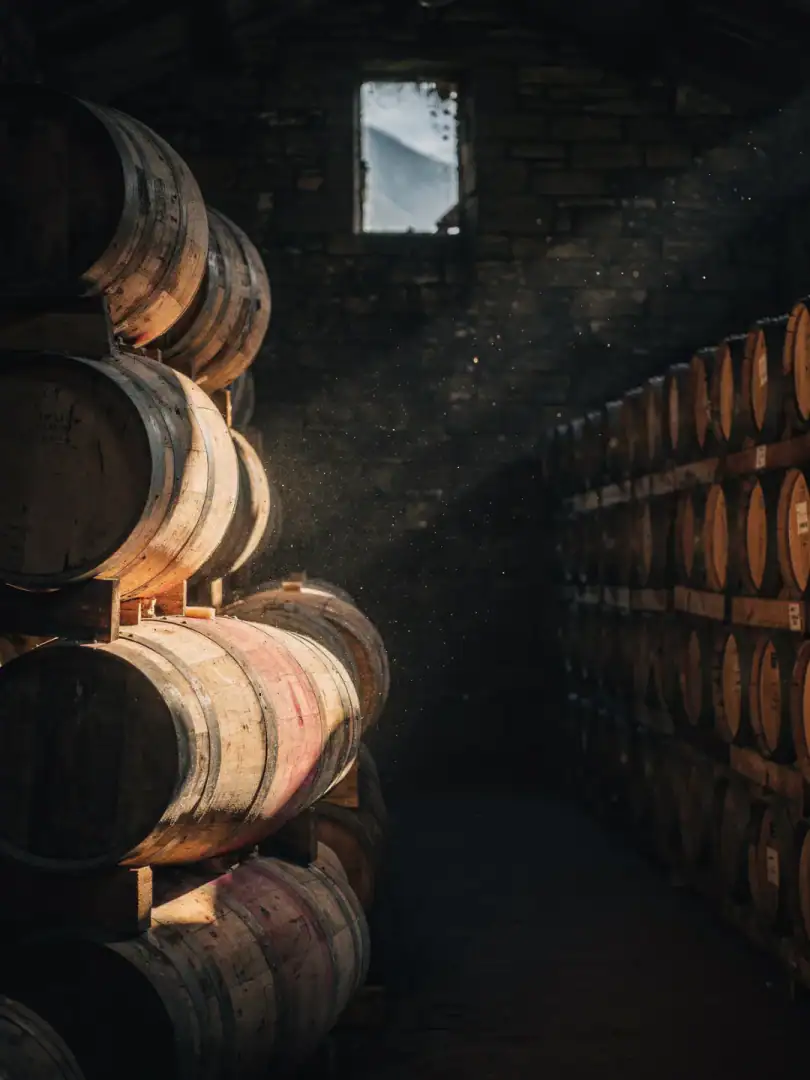
Mizunara and Bourbon Barrels
Cask & Maturation
Maturation needs, above all, one thing: time. Not every distillery in Central Japan had that from the start. Anyone laying down casks for the first time in 2008 has no old stock sitting in the warehouse, no matter how good that first batch turns out.
Chichibu faced exactly this problem. When Ichiro Akuto opened the distillery, there was no reserve from earlier decades. He had only new, empty casks and the salvaged remnants of his family's old Hanyu distillery. Only over the years did the warehouse fill with his own, matured whisky.
Mars Shinshu ages its whisky at nearly 800 meters at the foot of Komagatake, the highest elevation of any distillery in Japan. There, the temperature swings more sharply between summer and winter than in the lowlands. This very shift drives the whisky in and out of the wood harder than a mild climate ever could.
Fuji Gotemba chose its climate deliberately. The site on Mount Fuji's southeastern flank is cooler and drier than most of Japan. The average annual temperature sits around thirteen degrees Celsius, closer to Scottish maturation conditions than anywhere else in the region. With a capacity of twelve million liters a year, it needs warehouses on a correspondingly large scale, a scale no one else in Central Japan matches.
One type of cask keeps turning up across the whole region: Mizunara, a Japanese oak notorious among whisky casks. The wood is porous and works hard, casks made from it can leak easily, and production is expensive. Those who use it anyway do so for the note no other wood gives: resinous, faintly sweet, with a whiff of incense.