The short answer
The age statement on a Scotch counts the years spent in the cask. It states the age of the youngest whisky in the bottle. Years spent in your cabinet at home don't count.
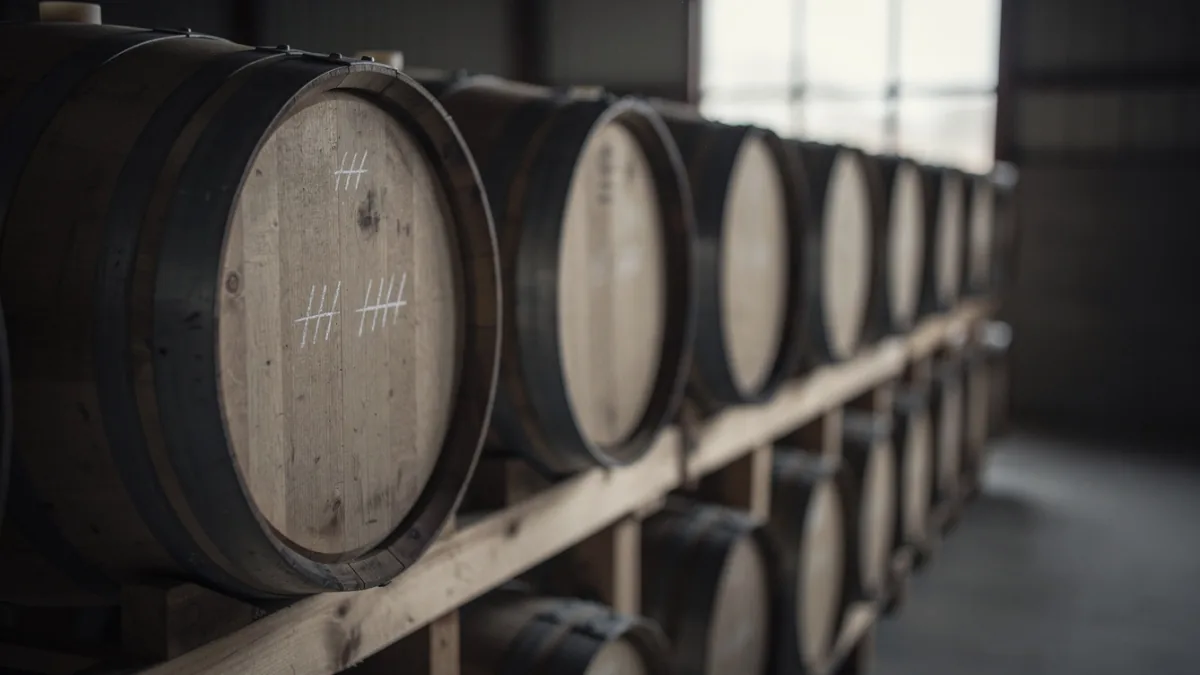
Twelve stays twelve
A whisky bottled at twelve years old won't become a 22-year-old after ten years in your cabinet. And if a bottle contains a blend of different cask ages, the stated figure still can't imply the age of the oldest component.
The reason lies in the wood. For whisky, maturation means interaction with the cask, and that ends once it's bottled. In the sealed bottle, that contact is gone, so maturation stops too. A bottle that's spent ten years in a cabinet has aged ten years. Its contents haven't.
With blends, the youngest component counts. If a bottling labeled twelve also contains much older whisky, the label still says twelve. Neither the average nor the oldest cask is stated there. So there can be more behind a low number than it reveals — you just can't prove it.
No number doesn't automatically mean worse
NAS stands for No Age Statement, meaning a bottle with no stated age. It doesn't tell you the exact age, and it's no reliable indicator of quality either. Judge by style, proof, and the specific bottling.
If you want to compare ages, choose bottlings from the same distillery that are as similar as possible otherwise. Different casks or proofs will otherwise shape your impression too. You're allowed to prefer an older bottling less. The number documents part of the production process. It's not a taste verdict, and you don't have to talk yourself into liking an unpleasantly woody sample.
Without a year stated, you still have the other details on the bottle: cask type, proof, series name, sometimes a short description of the style. These often tell you more about what to expect in the glass than a number would. Ruling out NAS on principle means dismissing a large part of what's available without even trying it.
A level-headed setup helps with comparisons: identical glasses, identical temperature, both samples side by side rather than on two different evenings. Jot down what you notice before looking at the labels. If you prefer the younger bottling, that's a valid result, not a flaw in your palate.
What an age statement really says
Three situations at the shelf where a number on the bottle seems to promise more than it actually delivers.
| Example | Meaning for Scotch |
|---|---|
| 12 years | The youngest whisky in the blend has reached this cask maturation time. |
| Additional years in the sealed bottle | They are not added to the stated cask age. |
| No age statement | This alone doesn't indicate lower quality. |
Where the age statement appears on the bottle
First, look for the word 'years' or 'Jahre' right next to the number. Not every number on a label is an age statement. Some belong to a series name or a cask number. Only once a number is explicitly labeled as an age does the rule about the youngest component apply.
After that, it's worth checking the proof and cask type. Two bottles from the same distillery with the same age statement can taste different once proof or cask type differ. For a genuine age comparison, look for bottlings that differ, as much as possible, in that one factor alone.
What the number on the bottle actually means
The most stubborn misconception is that whisky keeps maturing in the bottle. It doesn't. So an old bottle that's been sitting around for a long time doesn't contain an older whisky as a result. Equally common is the idea that the number represents an average. It actually marks the lower limit.
The third misunderstanding: higher number equals greater enjoyment. A long time in the cask brings oak character, and that can become too intense for your taste. Some people love exactly that; others find it dry and bitter. Which side you're on, you'll only discover by tasting.