Water Instead of Alcohol
Barrel & Maturation
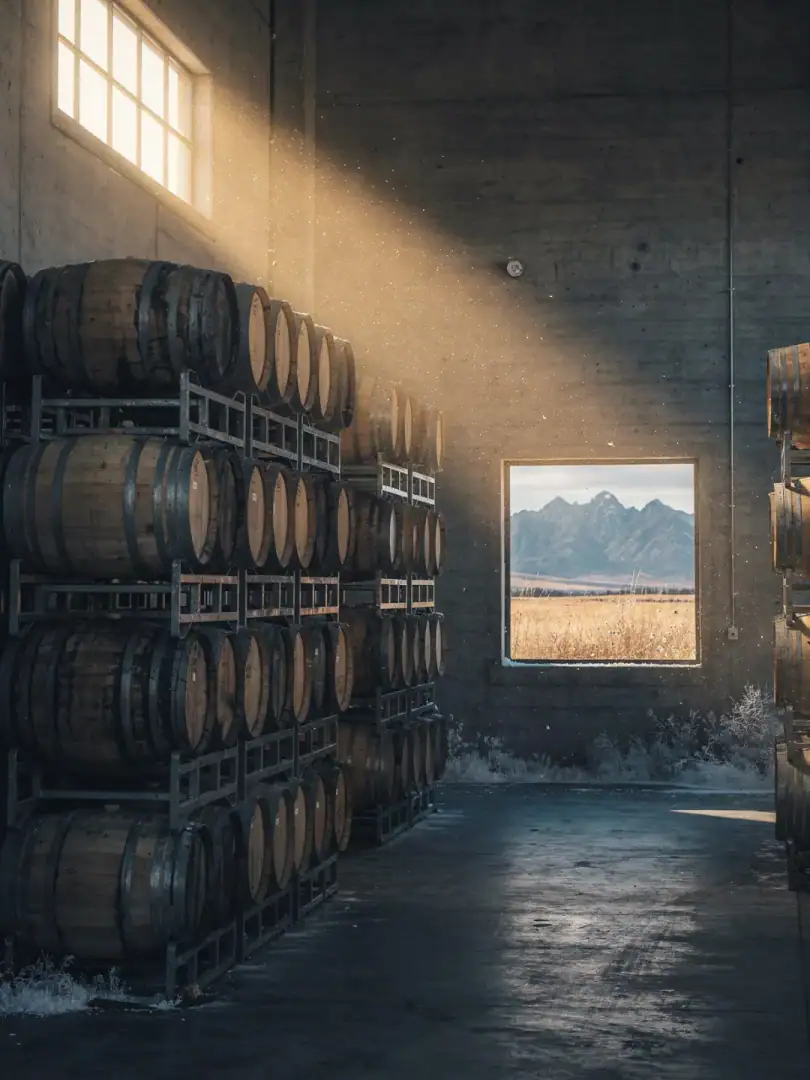
At around 78 percent alcohol, the young rye spirit from Calgary moves into the barrel. Usually, it's new, charred oak. Sometimes, it's used bourbon barrels that have already held several fillings.
What happens next flips a rule that holds true in almost every other whisky region. In humid air, as found in Scotland or Ireland, alcohol evaporates faster than water. The whisky loses strength there over the years. This is well known from Scotland.
On the dry prairie around Calgary, the opposite happens. Here, it's mainly water that escapes from the barrel, hardly any alcohol. As a result, the whisky can actually gain strength rather than lose it as it ages. This is rare, but in Alberta it's practically the norm.
At Alberta Distillers, some barrels climb from 78 to as much as 84 percent alcohol this way, entirely without any intervention from the distiller. The stronger spirit also penetrates deeper into the wood. It draws out more flavor from the oak than a weaker whisky ever could. Each year in the barrel intensifies this effect.
This interplay of Chinook, cold, and dry air turns every warehouse in Calgary into a small laboratory of contrasts. Inside, it stays cool; outside, temperatures can swing within hours during winter. It's no wonder that many barrels from Alberta end up reaching cask strength entirely on their own, without any added water. This is a rarity in whisky worldwide.