Barley & Law
Grain
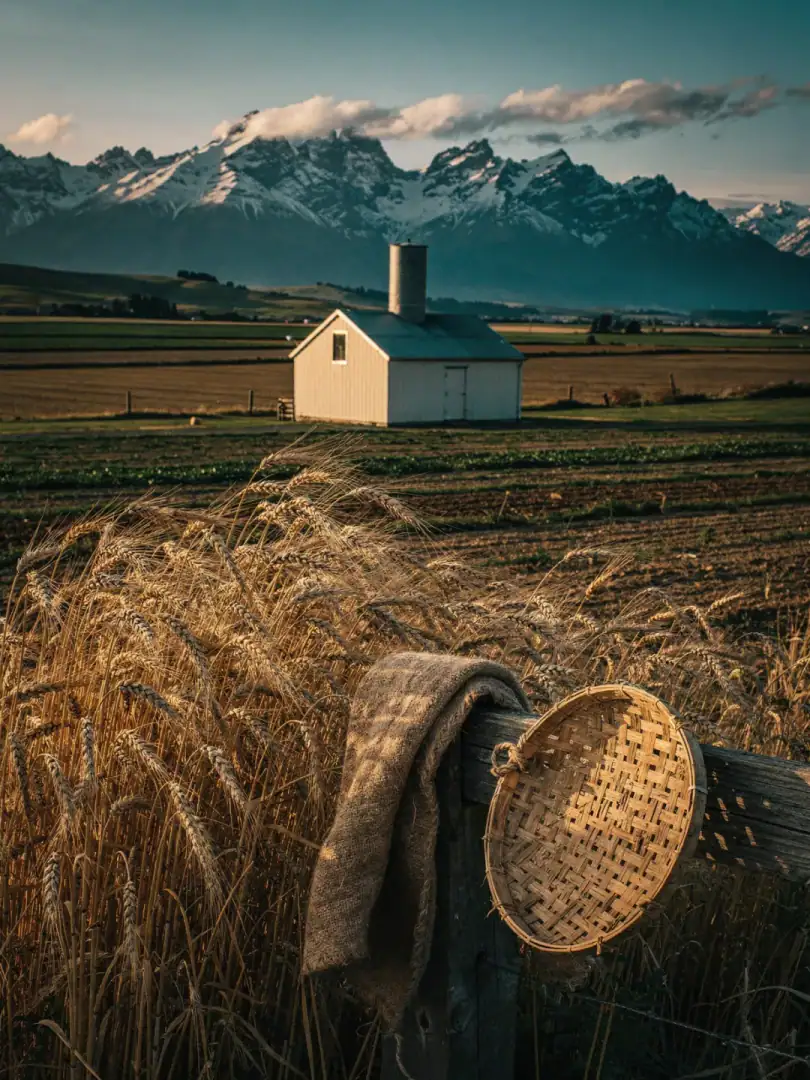
The barley for New Zealand whisky grows mostly on the Canterbury Plains, the vast granary of the South Island. The dominant variety there is Laureate, the same one grown in Scotland, but the climate here makes it sweeter than its British counterpart. British breeders even use the Canterbury Plains for their own seed trials in the off-season.
Unlike Scotland, New Zealand has no dedicated law defining what may be called whisky. The joint standard 2.7.5 of the Australia New Zealand Food Standards Code applies: anyone selling a drink as a spirit needs a minimum of 37% ABV. That's lower than what Scotland requires for Scotch.
Malting is mostly done at Gladfield Malting in Dunsandel, a small maltings in the middle of the Canterbury Plains. It supplies both unpeated malt and the peated variety, which Thomson, for example, sources for his South Island Peat Single Malt.
Most distilleries rely on pure malt whisky from barley; rye or corn barely appear in New Zealand mash tuns. An exception was the old Willowbank distillery: its four column stills produced grain whisky, while the copper pots supplied the malt whisky, two styles from a single operation.
Matt Thomson near Auckland went even further, experimenting at home as early as 2005 with smoke from manuka wood, which he tested on his own grill before opening his commercial still in Riverhead in 2014. His malt is 100% New Zealand-grown.