Rye and Barley
Grain
Millstone doesn't come as a single style, but two. A single malt is made from pure malted barley, a rye from rye grain. Both come from the same distillery but taste completely different – barley brings sweetness and grainy notes, rye brings bite and pepper.
The best-known of the rye whiskies is simply called 100 Rye, because almost everything about it aims at the number one hundred. The mash is one hundred percent rye, 49 percent malted and 51 percent unmalted. It's distilled in small copper pot stills, aged for one hundred months. In the end, it's bottled at one hundred US proof, fifty percent ABV.
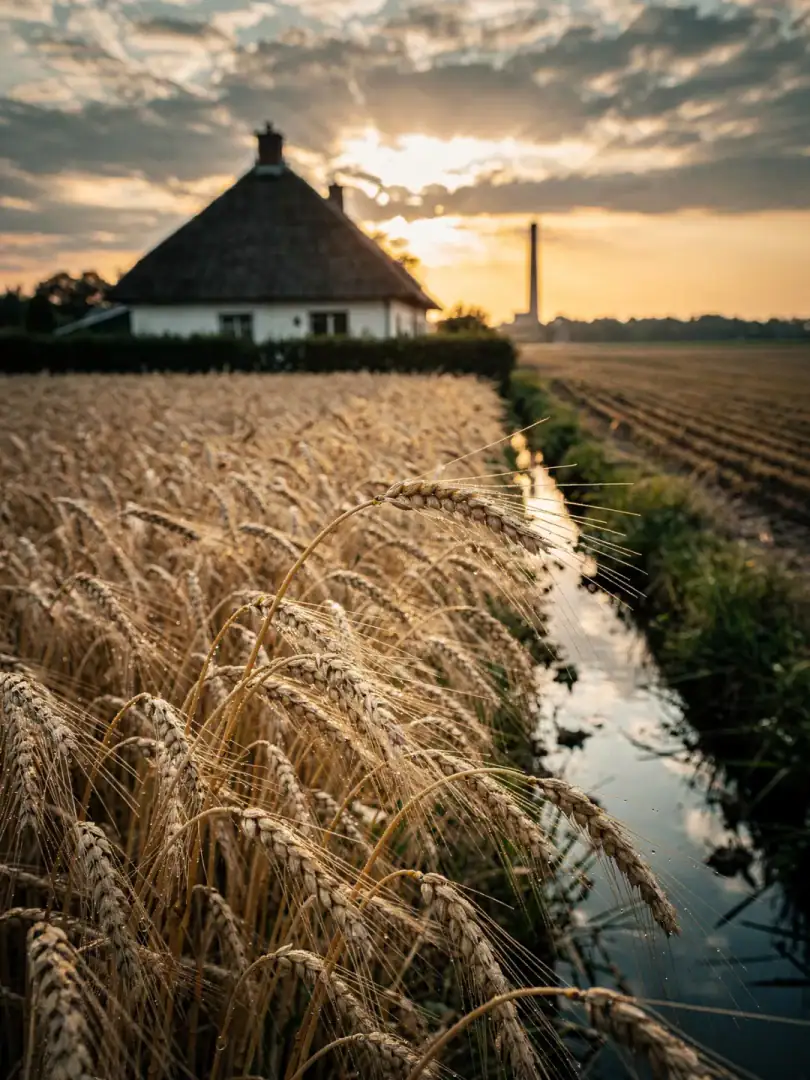
Rye is no exotic grain in the Netherlands. It also grows where the soil is poor and sandy, as around Baarle-Nassau in Noord-Brabant. For a long time it was the bread grain of poorer farms, before wheat pushed it aside. For Zuidam, then, it's more of a callback than an experiment.
Legally, whisky from the Netherlands doesn't belong to a protected region like Scotch. It falls under the EU-wide Spirit Drinks Regulation 2019/787: the mash must come from malted grain and be converted to sugar by malt enzymes. It must be distilled below 94.8% ABV and aged for at least three years in wooden casks up to 700 liters. Only those who distill exclusively malted barley in a single distillery may put “Single Malt” on the label.
This rule allows more than Scotch enthusiasts might expect. Unlike in Scotland, Dutch distilleries are even allowed to produce their single malt using continuous distillation instead of the classic copper pot still. Zuidam doesn't take advantage of this freedom – everything runs through the same small copper stills, whether malt, rye, or genever.