Land Below Sea Level
Water & Climate
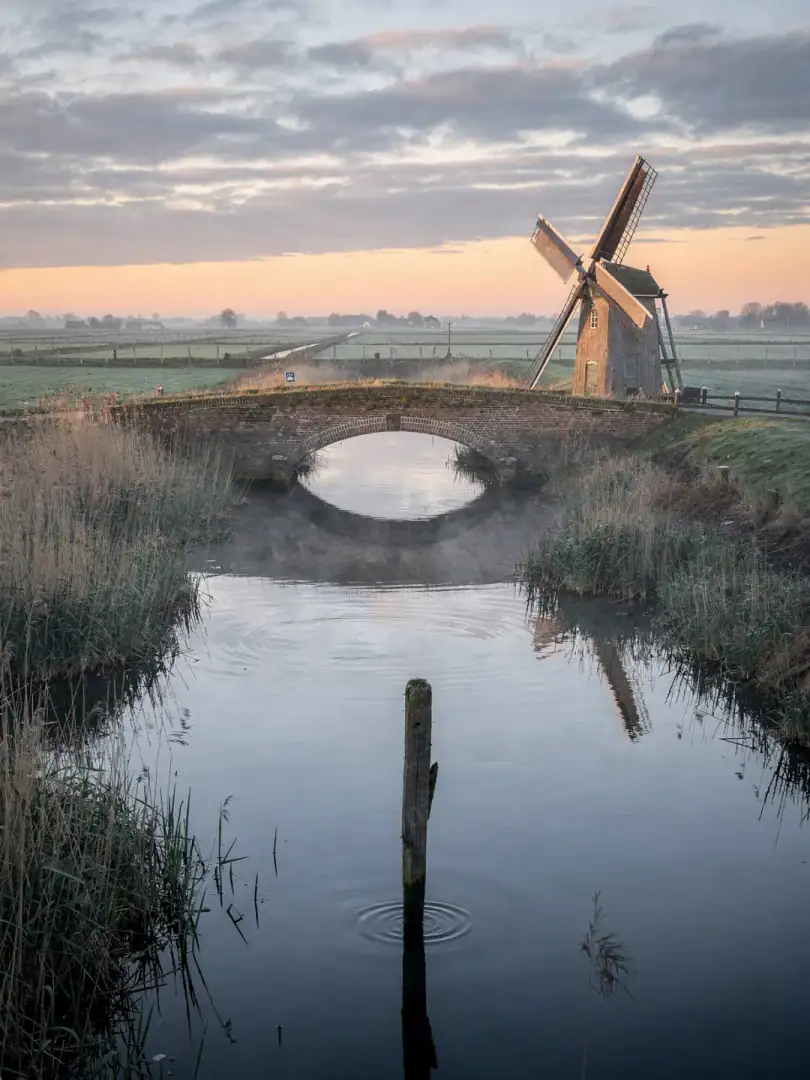
A large part of the Netherlands lies below sea level. What today is farmland, pasture, or a barley field was often once seabed or swamp, drained and enclosed by dikes – a polder. For centuries, windmills pumped water out of these polders into canals that carried it onward to the coast.
Baarle-Nassau also lies in this water-shaped landscape, though further inland and higher than the polder regions to the west. But the climate is shared along the whole coast: mild in winter, rarely hot in summer, almost always damp, since the wind mostly comes off the North Sea.
For cask maturation, this climate makes a noticeable difference. In Scotland, on average about two percent of a cask's contents evaporate each year – the so-called angel's share. In the Netherlands, that share is four to six percent a year, more than double. Warmer summers make the wood work harder, so the whisky picks up cask flavors faster and ages correspondingly quicker.
This is one reason why an eight-year-old Millstone often already shows as much cask character as some considerably older Scotch. The downside: every year in the warehouse costs more volume. What's gained in depth is paid for in quantity.
In this landscape, water is never far away – as rain, as canal, as groundwater beneath the sandy soil the distillery draws from. Drive through Brabant and you'll rarely see a horizon without a ditch in it.