Rye instead of barley
Region & History
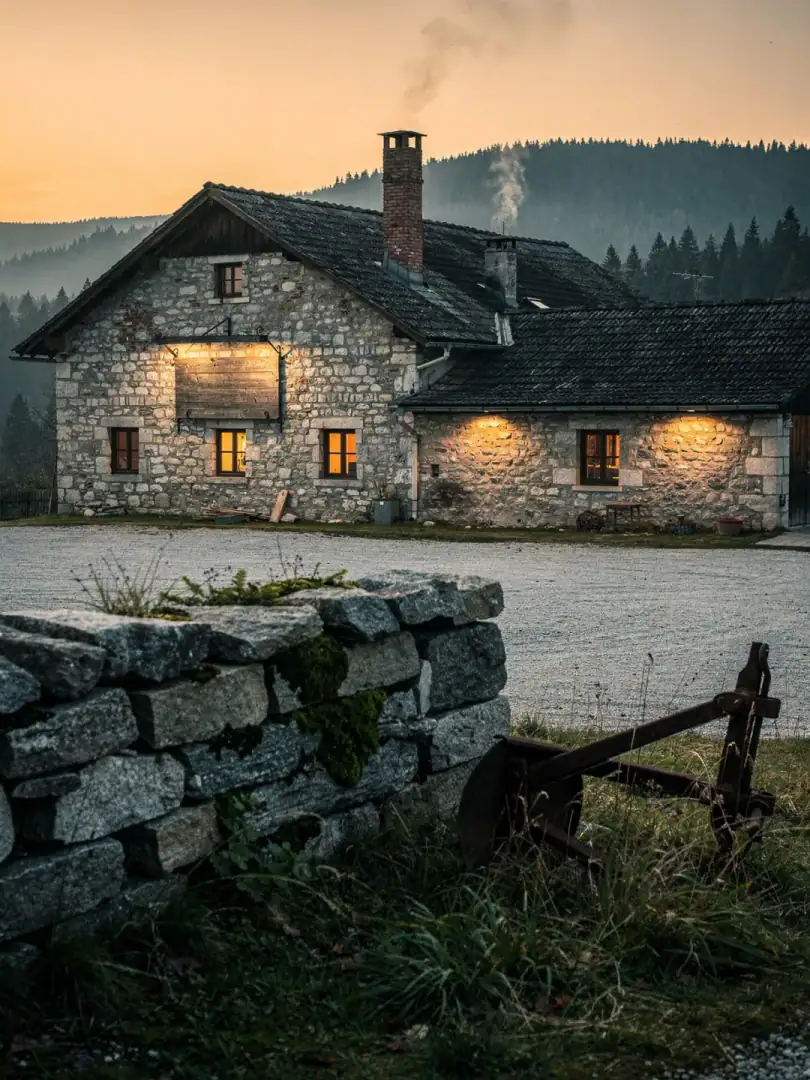
In 1995, Austria didn't have a single whisky distillery. Johann Haider changed that from his farm in Roggenreith, deep in the northern Waldviertel, where at most fruit brandies had been talked about until then. He decided against the Scottish rule of distilling barley and instead chose the grain that grew most reliably in the sparse fields of his region: rye.
The first batch had to mature in the cask for two years before it was introduced in 1997 as Original Rye Whisky J.H. – Austria's first homegrown whisky. There was no whisky tradition with its own rules, as in Scotland, that Haider could have followed. For him, only the general EU rule applied: whisky must rest in a wooden cask for at least three years before it can carry that name.
This very gap turned into an advantage. Because no regulation dictated which grain, which cask, or which maturation period made a true whisky, Roggenreith was free from the start to go its own way: malting rye and barley together, smoking it with peat from local coniferous forests, and letting it mature in casks made from Manhartsberg oak. What would have counted as a deviation elsewhere was simply the starting point here.
Over the years, the small farm distillery grew into the Haider Whisky Experience World, with daily tours, tastings, and its own whisky cinema. At the heart of the 7,000-square-meter Fire-Water Garden stand the four elements of whisky-making, complete with a Fire-Water Arena and a Celtic circle of the year and tree of life. A single idea turned into a destination that draws visitors from all over Lower Austria.
Today, Roggenreith is far from alone. Under the umbrella of the Austrian Whisky Association, 13 Austrian distilleries have since joined forces – from Reisetbauer in the Hausruckviertel to Broger in Vorarlberg. But Roggenreith remains the first address where an Austrian could learn how to distill whisky in their own country.