Rye and barley
Grain
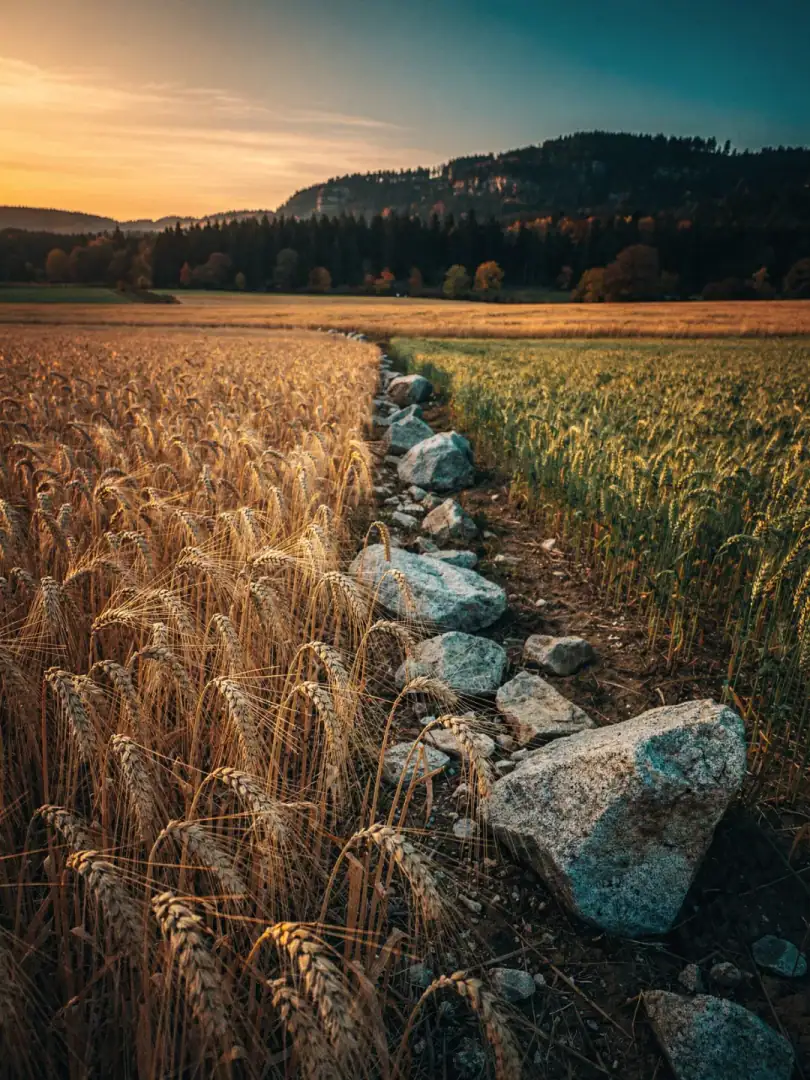
In the Waldviertel, the soil is granite-rich and lean. Summers are short, and not every grain can handle that. Rye can: it roots deep and tolerates frost well into spring. It doesn't need rich soil to develop a robust kernel – exactly what's missing in the granite and gneiss highlands.
The Original Rye Whisky J.H. consists of 60 percent rye and 40 percent barley malt. This blend is rare in the country. Pure rye whisky, as known in North America as Rye Whiskey, often tastes sharp and spicy, almost peppery. The added barley rounds off these edges in Roggenreith without masking the rye character.
Austria has no law of its own regarding a minimum amount of rye. It's different in the USA, where at least 51 percent rye in the mash bill is required for a whisky to be called Rye Whiskey. Roggenreith clearly exceeds this mark, and for good reason: the grain comes entirely from its own region.
For the mash, the grain is milled and mixed with warm water from the farm's own spring. Yeast is then added until sugar turns into alcohol. Rye makes this step technically more difficult than barley: it has no husks, which act as a natural filter during lautering. The mash also tends to become sticky. Anyone who sticks with rye anyway does so for the flavor, not the convenience.
Alongside the classic Rye, Roggenreith also produces a version made from 100 percent dark-roasted rye malt. This is additionally smoked with peat. This whisky has nothing in common with the mild grain whiskies of other regions. A single grain shows just how differently whisky can taste, depending on whether you let climate or tradition decide.