Smuggling & Licence
Region & History
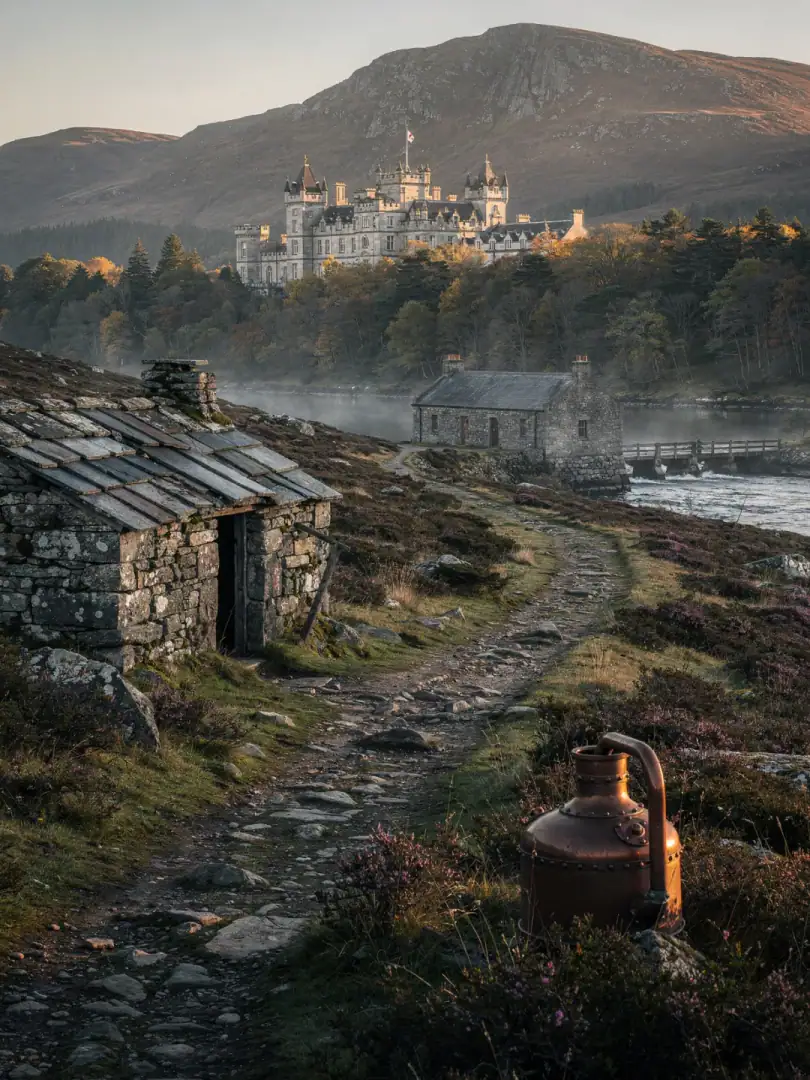
For centuries, more whisky was distilled in the glens of the Highlands than the state ever laid eyes on. Peat and barley were available on every farm, while the nearest excise post was often a day's walk away. Farmers distilled in winter, when the fieldwork lay idle, and quietly sold off the surplus. Estimates from the 1820s suggest that more than half of all whisky drunk in Scotland was illicitly distilled, much of it in the Highlands.
In 1823, the Excise Act put an end to this game of cat and mouse. The law lowered the tax on legal spirits and simplified licensing so drastically that running a legal still suddenly made economic sense. Anyone still distilling illegally now risked real penalties, since customs officers could seize casks and equipment without further ado. Within a few years, dozens of Highland farmers had registered their distilleries officially.
It took Queen Victoria to truly transform the region's image. When she and Prince Albert visited near Balmoral in 1848, they called on the small distillery at the foot of Lochnagar. The Queen was so taken with the visit that the distillery was granted the title 'Royal', becoming Royal Lochnagar. A drink once associated with smugglers had become a drink fit for the court.
Today, many Highland names belong to international corporations. Glenmorangie has been part of the French luxury group LVMH since 2004, while Dalmore belongs to the Philippine Emperador Group. At the same time, new, small distilleries keep appearing: Wolfburn in Thurso opened in 2013, making it the northernmost distillery on mainland Scotland. Between global conglomerates and one-man operations, the Highlands show just how broad their whisky scene has become.