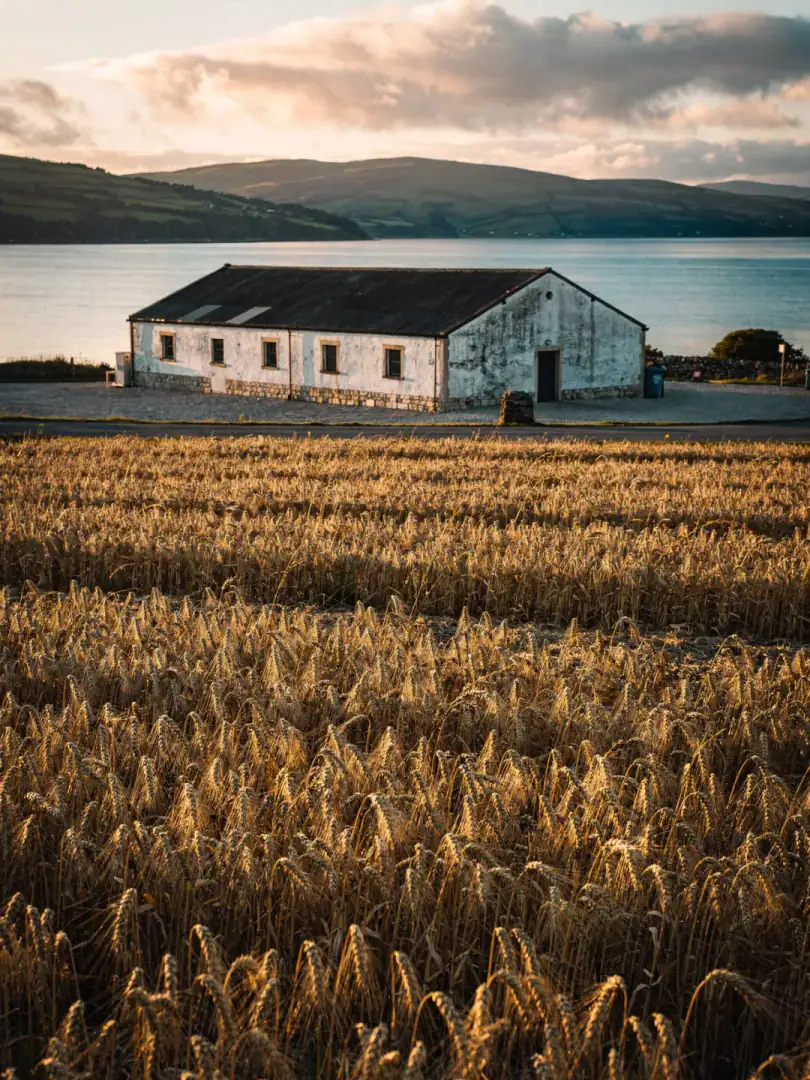
Barley from the Firth
Grain
Around the Cromarty Firth lie some of Scotland's most productive barley fields, flat, open to the wind, and kept mild by the Gulf Stream. Right here, between the Black Isle and the mainland, Glenmorangie and Dalmore source part of their grain practically from next door. The rest comes from Scottish contract farmers, who are required to grow specific barley varieties, usually two-row malting barley with a high starch yield.
Malting is often no longer done on site but at large maltings such as Ord Maltings near Muir of Ord. These maltings supply several distilleries in the region at once. The malt arrives by the truckload, either already milled or as whole grain, depending on what each distillery needs. Small producers like Wolfburn, by contrast, buy directly from individual farmers and know exactly which field their grain came from.
Under the Scotch Whisky Regulations 2009, a Highland single malt may contain nothing but water, yeast and malted barley. It must be distilled in copper pot stills at a single distillery. Other grains are off-limits if the label is to say 'Single Malt'. Only a few Highland operations are permitted to work with maize or wheat, such as the grain distillery at Invergordon on the Cromarty Firth. The reason: it officially produces grain whisky rather than malt whisky.
Malt and grain whisky later come together in the well-known blends for which Highland whisky has always been in demand. The mash itself takes place in heated vessels, where hot water sourced locally converts the starch in the malt into sugar. What remains afterwards, the wort, goes straight into the fermentation vessels, where yeast turns it into alcohol, the first step towards every Highland whisky.