Barley, Rye, Law
Grain
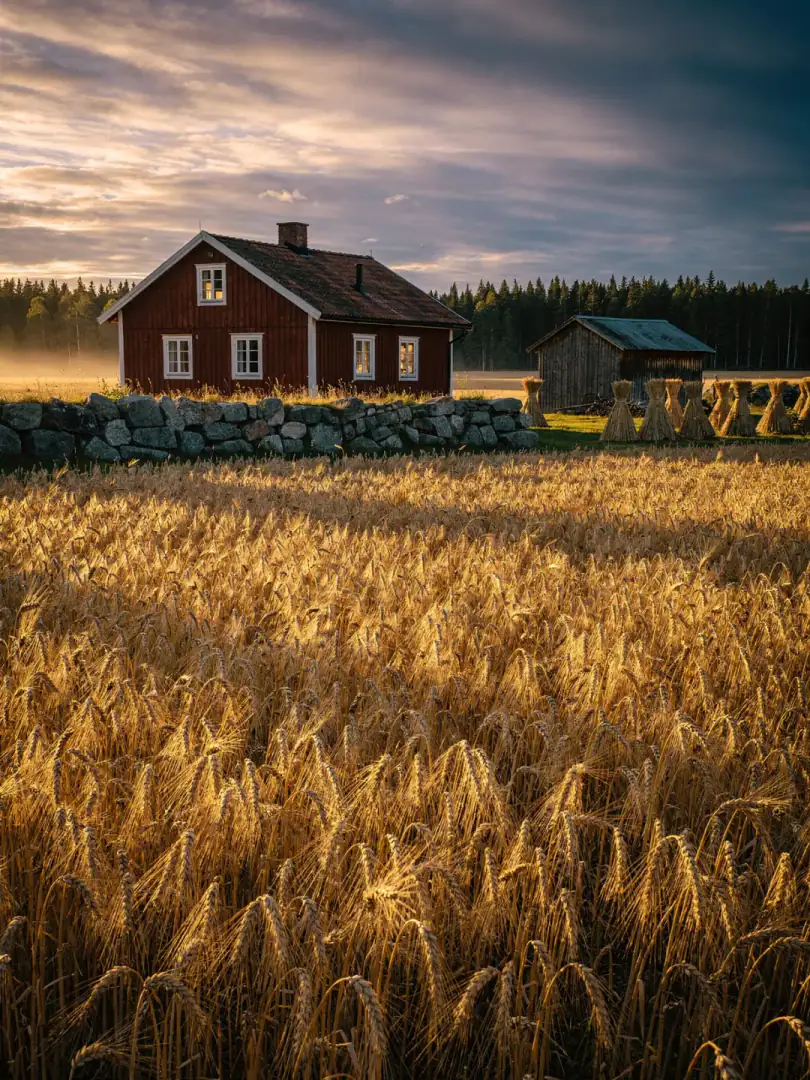
In Sweden too, barley forms the basis for single malt. But where it comes from differs markedly between the four houses, since Mackmyra malts part of its barley itself. It's grown in Swedish fields, mostly in the milder south of the country. This is unusual: most distilleries worldwide buy finished malt from large commercial maltsters. Mackmyra, by contrast, malts right next to its own distillery, from steeping through to kilning.
Unlike in Scotland, rye is firmly part of everyday life in Sweden, appearing on the breakfast table as bread, and now also in the still on Hven. The island distillery Spirit of Hven produces its own rye whiskey, the Hvenus Rye. It's made predominantly from rye malt rather than barley. This combination is rare in northern Europe. It shows how differently the four Swedish houses choose their grain, even though they're all in the same small country.
When it comes to the mash, Swedish water needs little help. It's soft, because it filters through granite and gneiss rather than limestone. Limestone is the rock that underlies large parts of Scotland and Ireland. Soft water dissolves fewer minerals and keeps the mash cleaner in flavor, letting the malt character come through more strongly.
There's no legal requirement specifying how much barley or rye a Swedish whisky must contain. Instead, the distilleries follow the general EU rule for whisky. The grain must be fully fermented and distilled. Only this way does whisky end up in the glass, rather than flavored neutral spirit.