Granite, Rivers, Cold
Water & Climate
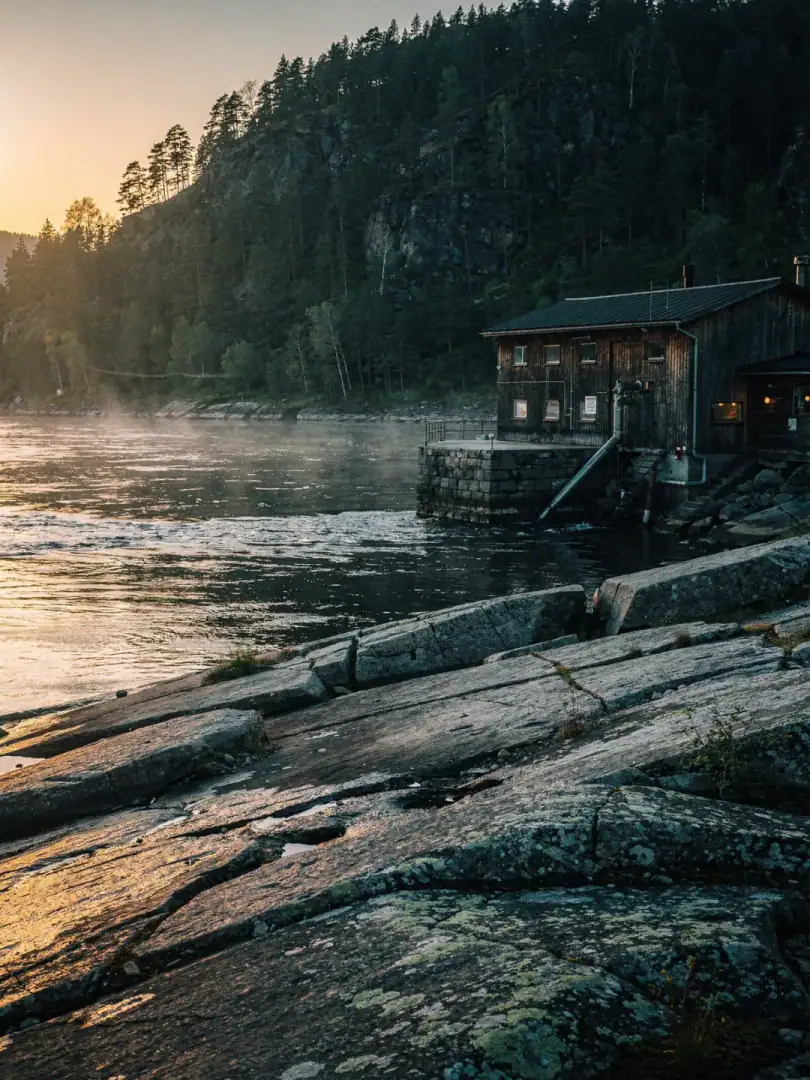
Water shapes each distillery differently. The reason lies in the varying climate between the north and south of Sweden. In Bjärtrå, where High Coast is located, the Ångermanälven flows right past the building. The broad river winds through the forests of the Ådalen out to sea. Beneath most of the country lies granite and gneiss, ancient rock of the Baltic Shield. Rain and meltwater seep through without picking up much lime. As a result, the water emerges from the ground soft and low in minerals, unlike in the lime-rich regions of Scotland or Ireland.
When it comes to climate, the distinctive feature is less about humidity and more about temperature swings. High Coast sits at 63 degrees north latitude. Winters there drop well below freezing, while summers can get quite warm. According to the distillery, it's precisely this shift that makes the casks breathe more vigorously. The wood contracts in winter and expands again in summer. With each cycle, the whisky picks up color and flavor from the wood faster than it would in Scotland's more even climate.
On the west coast, where Smögen is located, the sea dominates instead. The warehouse stands near the coast of Bohuslän, in salty sea air. The air moves through the cask staves and lends the whisky a slightly maritime note, similar to Scottish coastal island whiskies. On Hven, meanwhile, the whisky matures on an island right in the middle of the Öresund. There, wind sweeps over the casks from both sides of the strait.
Near Gävle too, where Mackmyra runs its Gravity Distillery, the climate is continental. Winters are cold and often snowy, summers short but intense. This pattern extends across much of central Sweden. In the warehouse, this causes maturation to fluctuate over the years much as it does on the Ådalen, just with different values.