Mine, Peat, Juniper
Malt & Peat
On Islay, peat is everywhere. In Sweden it's not a given, but it does appear, just differently. Mackmyra is one of the few distilleries in the world that produces its own malt in-house. The barley is steeped and germinated right next to the distillery in Gävle. It then dries over the kiln, rather than being bought in as finished malt from a large commercial maltster.
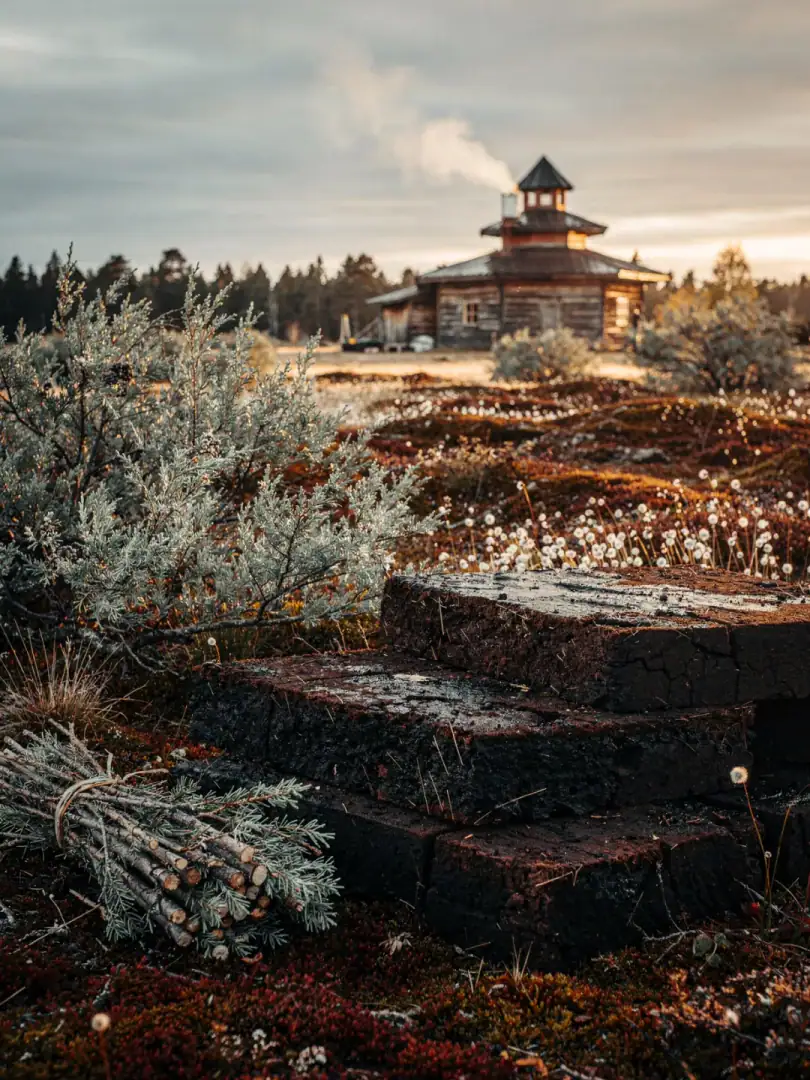
For the smoky Svensk Rök line, part of this barley is dried over peat. The peat comes from the nearby Karinmossen bog and isn't imported. Freshly cut juniper branches, enris in Swedish, are added to the peat fire. They're topped up every four hours during the roughly 36-hour kilning. The smoke drifts through the damp malt this way, smelling different from the pure peat smoke of Islay. It comes across as more resinous, with a green, almost coniferous note from the juniper.
In the end, Mackmyra blends about seventy percent peat-kilned malt with thirty percent untreated, unpeated malt for Svensk Rök. The untreated portion contributes its own mildness and softens the smoke's edge.
Smögen on the west coast works quite differently. This small distillery uses extremely heavily peated malt, with a phenol level of 96.9 ppm. This is one of the highest levels used by any distillery in Europe. It clearly exceeds what even robust Islay whiskies typically reach. High Coast and Hven, on the other hand, show that peat isn't a must in Sweden. Both houses leave malt choice and smoke level open. They'd rather let the unpeated malt character speak for itself than force every release through the same peaty mold.
Living sphagnum moss that keeps growing and protects the peat beneath it.
The root: Removed before cutting and left in place so the bog can keep growing.