Bulette & Soleier
Vodka & Food
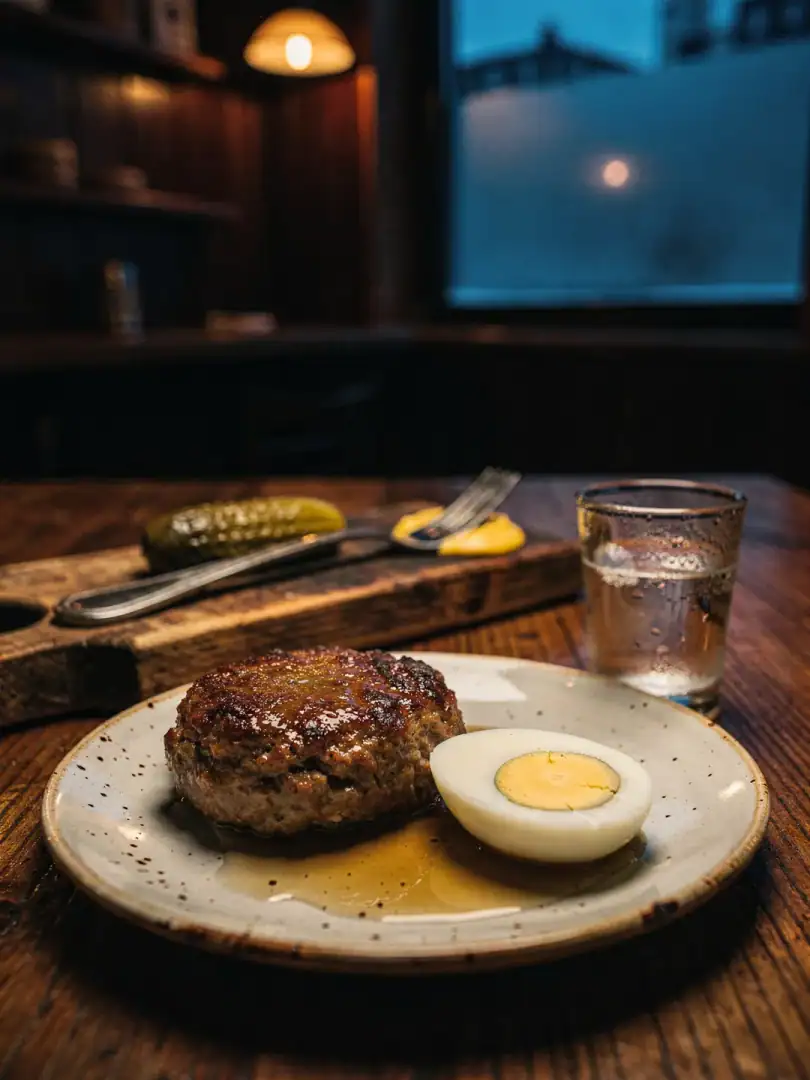
Two dishes traditionally go with a shot at a Berlin pub: Buletten and Soleier. Both are simple, hearty, and cheap - currywurst-level fare, not fine dining, but deeply rooted in the city. They're usually served without much fuss, straight on a paper plate.
The Bulette itself is older than its French-sounding name suggests. The mix of lean beef and fatty pork was originally brought to Brandenburg by Huguenots. The word Boulette only entered the city's vocabulary later, during the Napoleonic occupation of Berlin between 1806 and 1813, as Napoleonic soldiers marched eastward.
Soleier, on the other hand, are simply hard-boiled eggs left to sit in a strong brine until the shell and egg white take on a typical brownish color. Along with Rollmops and fried herring, they were a standard fixture in every Berlin pub. They were usually served straight from the jar on the bar.
Both dishes pair well with vodka for a simple reason: fat and salt tame the sharpness of the alcohol. The cold shot then clears the palate again afterward. This interplay explains why shots and snacks are almost always ordered together in Berlin pubs, never one without the other.
Today, Soleier have become rarer. Buletten, on the other hand, still hold their place in almost every Berlin canteen and curry stand. Anyone who has tried the combination once - a cold Bulette, a Soleier, and an ice-cold Wodka Gorbatschow or Puschkin alongside - quickly understands why this pub culture has survived for so long.