Kilu and Verivorst
Vodka & Food
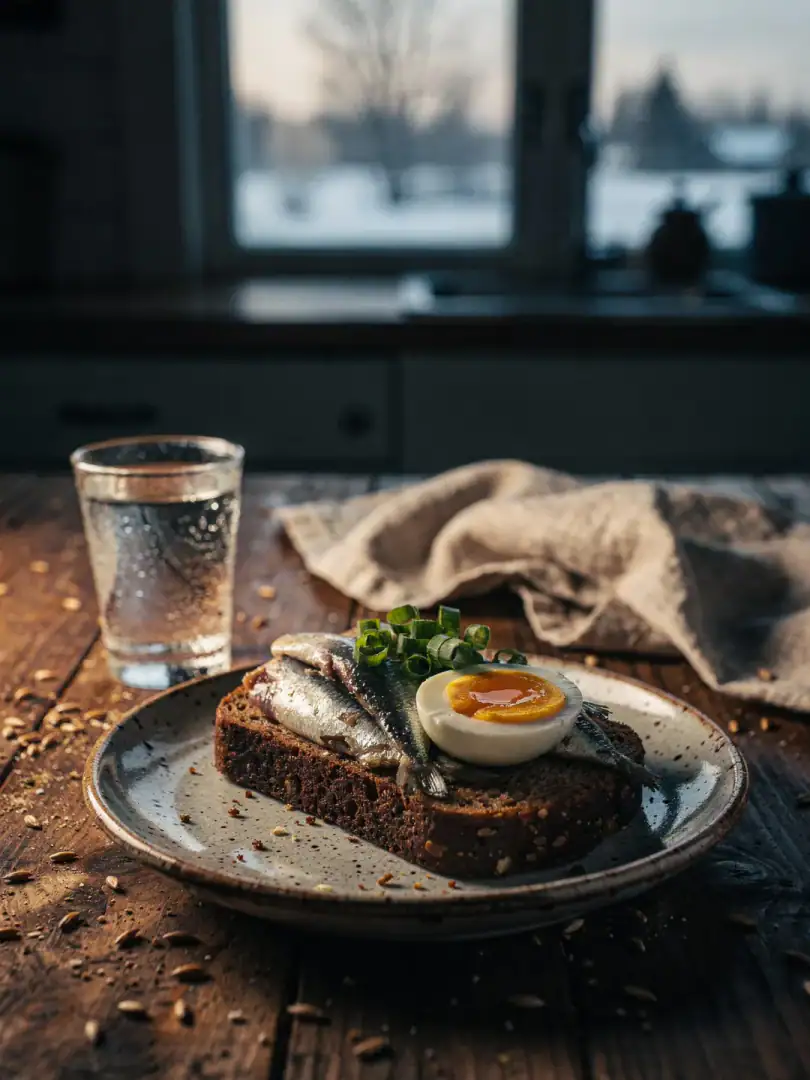
Small, boldly seasoned bites appear on the table alongside Estonian vodka far more often than a hot main course. The best-known of these is kiluvõileib, the open-faced sprat sandwich. It's made from a slice of dark rye bread spread with butter or egg butter, topped with pickled sprats, sometimes with egg and spring onions.
The Estonian rye bread that goes with it is dense, dark, and slightly sour. The dough rises slowly with a sourdough starter, often for longer than a day. Combined with the salty fish, it makes for a hearty, oily bite. It calls for something clear and cold to cleanse the palate again, rather than adding yet more flavor.
That's exactly what a neutral grain vodka like Viru Valge from Tallinn delivers, ice-cold and neat. It cuts through the fattiness of the sprats and the saltiness of the bread without competing for attention. A sweet or heavily flavored vodka would only get in the way here, working with the fish instead of against it.
Around Christmas, a different dish takes center stage: verivorst, a blood sausage made from pig's blood, barley, and onions. It's baked rather than smoked and served with lingonberries and mulgikapsad, an Estonian sauerkraut. It's braised for a long time until it turns mild and slightly sweet.
The same logic applies here too. The fat of the sausage and the acidity of the sauerkraut pair better with a clear, cold vodka than with a sweet liqueur, which would quickly overwhelm the combination. The vodka stays a supporting player, not the star of the show.