Court, Crown, Control
Region & History
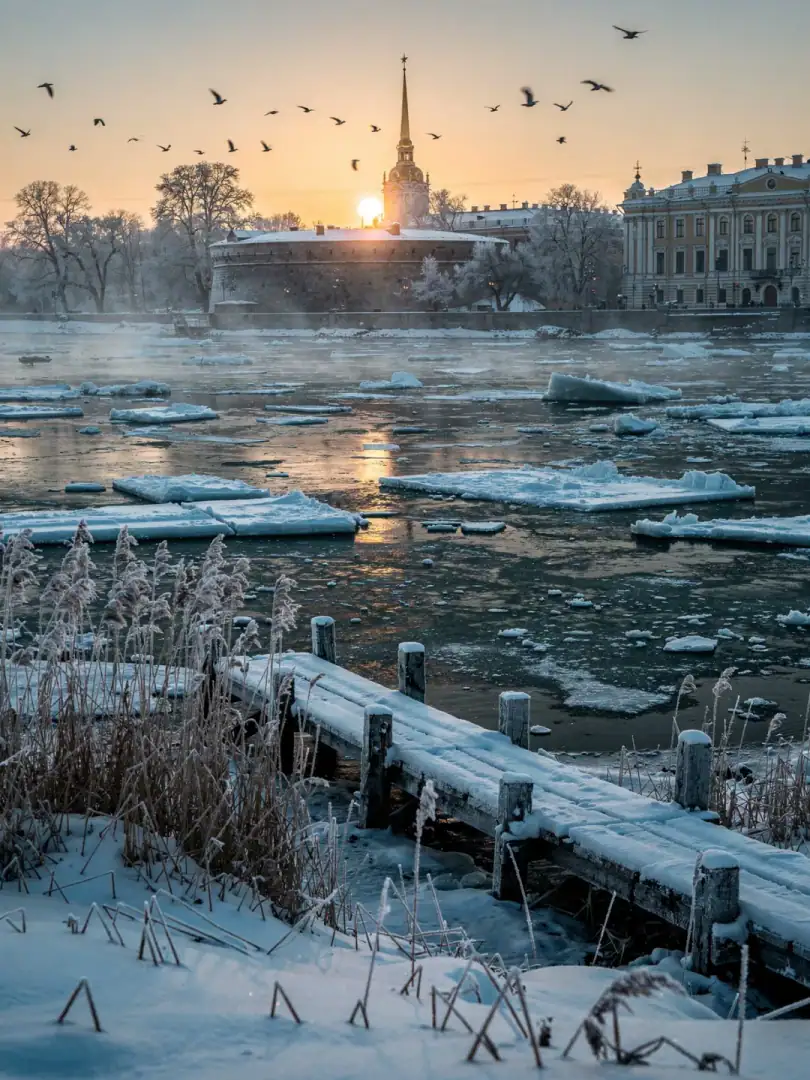
St. Petersburg has only existed since 1703. Tsar Peter the Great had the city built on the marshy islands of the Neva, as a window onto Europe and a counterpoint to old Moscow. Nine years later the court moved here, bringing with it the power to decide over vodka and its sale. Two centuries earlier, Ivan the Terrible had already established the first state-run taverns in Moscow, the kabaki.
Over the centuries the crown leased out the right to sell alcohol to merchants and nobles, who paid fixed sums and were free to set their own prices. In 1894, Finance Minister Sergei Witte put an end to that: from then on, only the state was allowed to buy and sell vodka. The reform was justified as a measure of temperance, though it was also designed as a source of revenue.
The figures show just how well that worked. In 1902 the monopoly brought 341 million rubles into the state treasury; by 1911 it was 594 million, and by 1914 roughly a third of all state revenue came from vodka sales. At the same time, per capita consumption rose from eight to fourteen liters of pure alcohol a year.
In 1914, at the outbreak of war, Tsar Nicholas II suspended sales almost nationwide, to keep soldiers and factory workers sober. The measure barely outlived the tsar: after the 1917 revolution, the Bolsheviks initially kept the ban in place, before the state abandoned it in the mid-1920s and took over the sale of alcohol itself.
It wasn't until 1992, after the fall of the Soviet Union, that Boris Yeltsin lifted the state monopoly on production. It was in St. Petersburg, of all places, that two names emerged which still stand for the city today: in 2003 the Ladoga Group launched the Tsarskaya brand, whose recipe the master distiller reportedly reconstructed from historical records dating back to the era of Peter the Great. In 1998, the entrepreneur Roustam Tariko founded Russian Standard and built his distillery on the banks of the Neva as well.