Teff, Barley, Millet
Malt & Grain
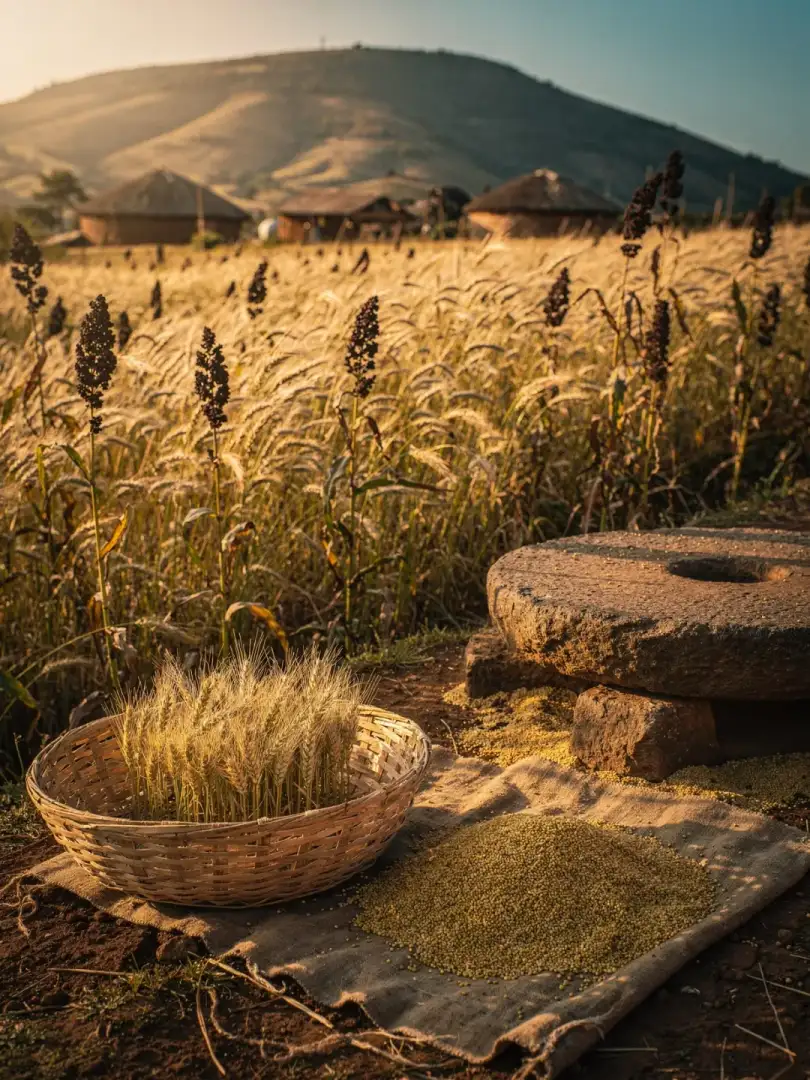
Tella is made from whatever grain a household has on hand. Barley, teff, sorghum, maize and finger millet — called dagussa in Amharic — are all mentioned. Which one ends up in the pot depends on region, harvest and taste, which is why Tella tastes different in the north than in the south.
Teff is the country's best-known grain. It's tiny, gluten-free, and the basis of injera, the sour flatbread on which almost every meal is served. As a brewing grain it does appear in Tella, though many recipes favor barley or maize and use teff only as an addition.
Malting happens at home. The grain is germinated, dried and ground, and the result is called bikil in Amharic — malt. It's ground together with the gesho, after which the mixture is combined with water. Part of it is often roasted, which can give Tella a darker color and a slightly toasty note.
One special detail kicks off fermentation. Some brewers roast a flatbread made of grain and add it to the mash to get fermentation going. This bread replaces the commercial yeast that isn't available in the home.
This has little to do with the work of the big breweries. Bedele Special is described as a pale lager, St. George as a lager, both made with pale malt. Here it's not the house style that decides but the brewery's recipe, ensuring every bottle from Bedele or Addis Ababa tastes like the last.