Ice-Cold or Aromatic
Tasting
A Quilmes Cristal smells lightly of grain and fresh bread, tastes lean and almost neutral, and finishes with a brief, mild bitterness. It's precisely this restraint that makes it a beer to drink with rich meat, since it rinses the palate clean again.
With Antares from the craft scene, the differences are greater. Antares is considered a pioneer of craft beer in Argentina and brews a wide range of styles. Cerveza Berlina originally hails from Patagonia and is now found in Buenos Aires too, with German-inspired beers.
A lager needs low temperatures, around four to six degrees Celsius, to keep the foam firm and the flavor crisp. An American Pale Ale, by contrast, can be served warmer, around eight to ten degrees. Then citrus and pine unfold, which an overly cold glass would otherwise mute.
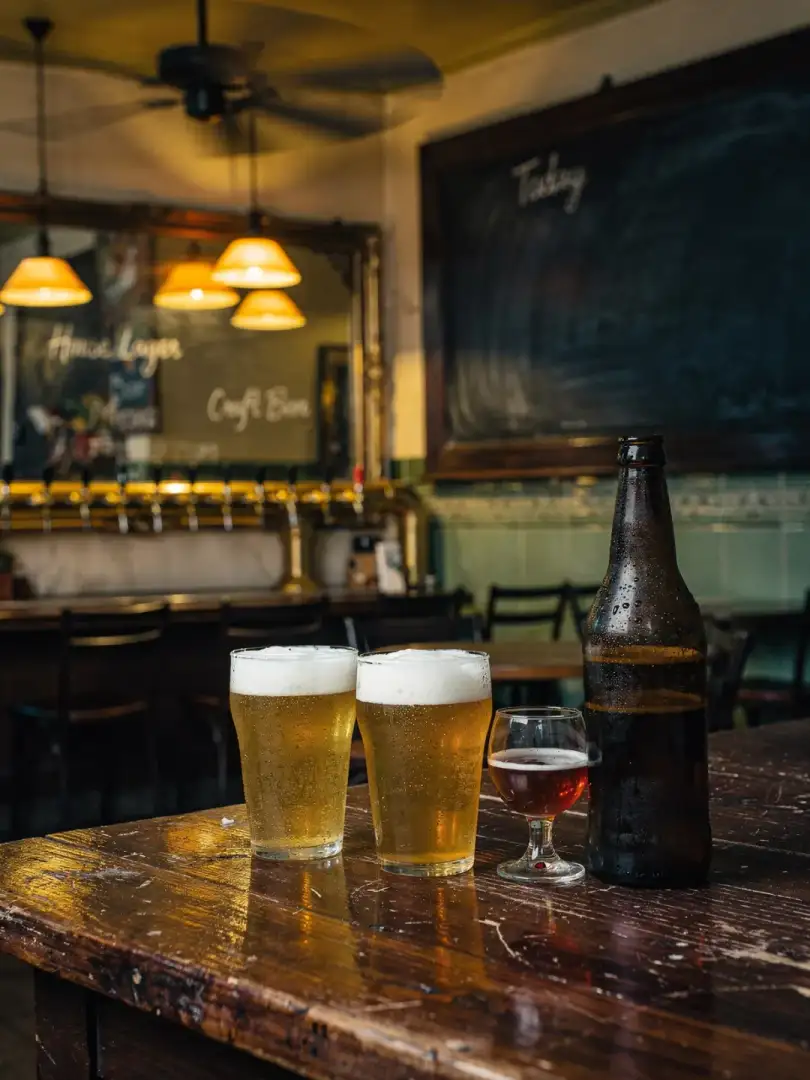
In many bars the lager arrives as chopp, meaning draft beer, in a slender glass on the table. In Palermo's craft venues it's served as a pinta, in a glass the size of a pint. The bartender pours the beer in at an angle, then tilts the glass upright at the end so a fine crown of foam forms.
Anyone tasting a beer first smells it, looks at the color and foam, then takes a small sip and lets it linger briefly in the mouth. Especially with a mild lager, this helps pick out the subtle notes of malt and hops that would otherwise get lost in simple thirst.