The short answer
Try small amounts from a clean glass. Describe aroma, mouthfeel, and finish separately. Color alone is not an evaluation. It tells you something about the malt and little else.
What you notice before the sip
Smell before you drink. Four directions are enough to start: bready, fruity, spicy, or roasty. The grain and roast notes come from the malt. With wheat beer, fermentation aromas also stand out—scents created by the yeast during fermentation.
Cloudiness in the glass unsettles many people. Depending on the style, it's expected and entirely normal. A quality flaw isn't automatically behind it. So first check what kind of beer you actually have in front of you.
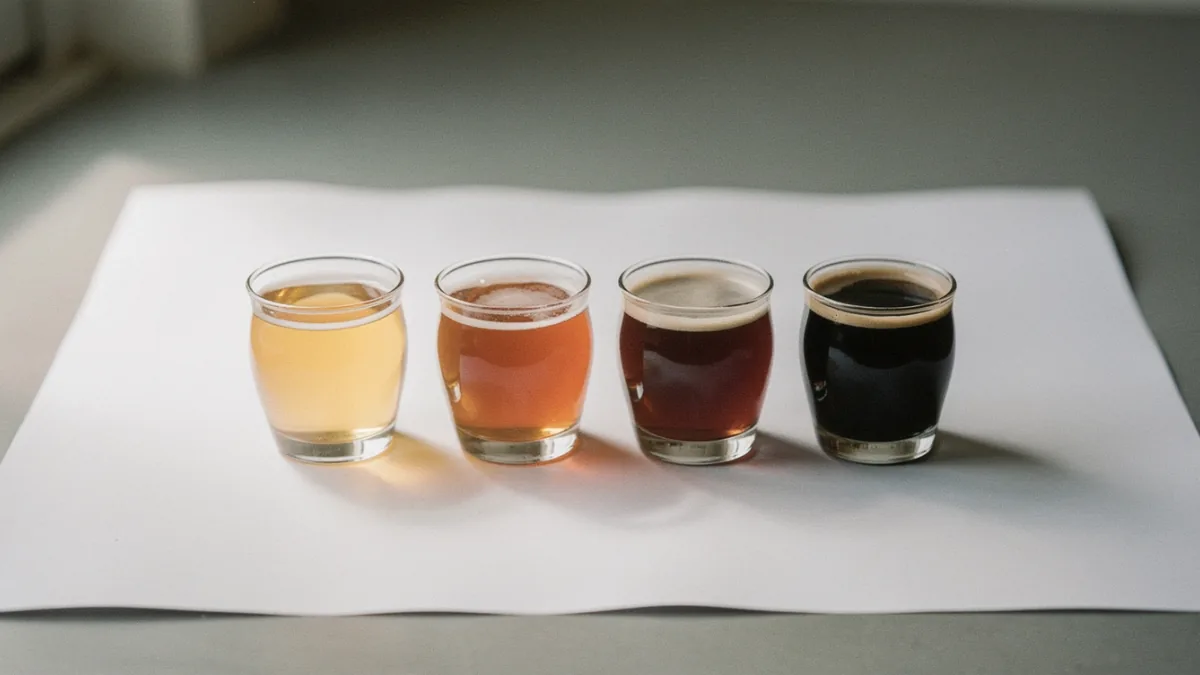
Color doesn't count as a judgment here. It only shows you how strongly the malt was heated. It says nothing about strength or quality, whether pale or dark. Note it briefly and move on to the aroma.
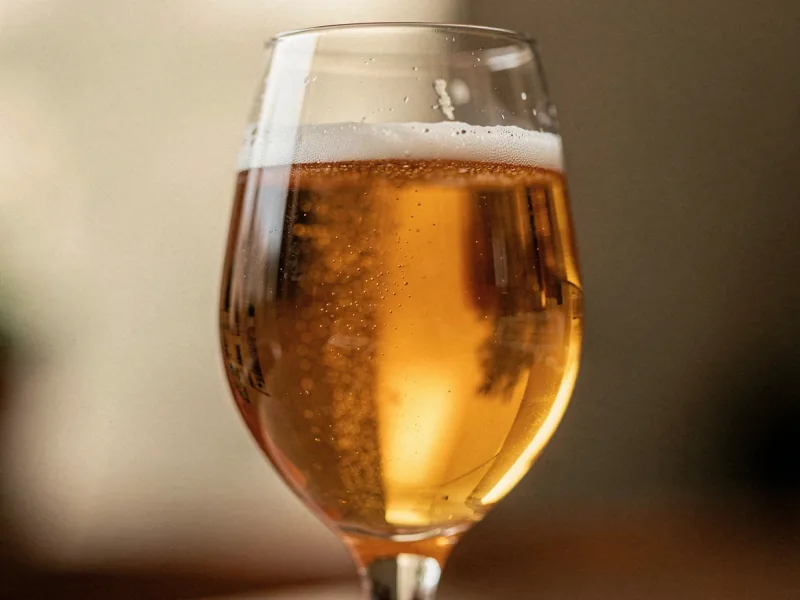
The glass also determines how much you actually smell. A glass that narrows slightly toward the top holds the aroma in. A straight pint glass lets it escape upward. For a tasting, a small wine glass is therefore enough. It's better suited for this than most beer glasses.
Two small things help you more than expensive equipment. Use a properly rinsed glass. And pour only a little. From a small amount you smell more clearly, and you can line up several beers side by side.
Mouthfeel and finish in your own words
After the sip, ask yourself three questions. Does the beer feel light or full-bodied? How lively is the carbonation? And how long does the bitterness linger? That's all you need to later order something similar or deliberately different.
Temperature changes more here than most people expect. Many beers end up too cold in the glass. At 6 to 8 degrees Celsius, malt and hops come through clearly. At 4 degrees, almost everything tastes the same. Let a glass sit for five minutes and try again. The difference surprises most people.
Only compare what's comparable. Two samples should be similarly tempered and similarly fresh. Comparing a warm beer against an ice-cold one distorts your judgment. The same goes for a long-open bottle next to a freshly opened one.
Write down the label and your own observation before reading other people's ratings. Otherwise, afterward you'll mainly find what others have already described. "Fruity aroma, but too bitter for me" tells you more in six months than two stars. The sentence names a reason, not just a star rating.
Separate your taste from the craftsmanship. A beer can be made flawlessly and still not appeal to you. That's a matter of fit, not a flaw. Conversely, you don't have to like a celebrated style just because others rate it highly. Your note is for you, and that's exactly what it's for.