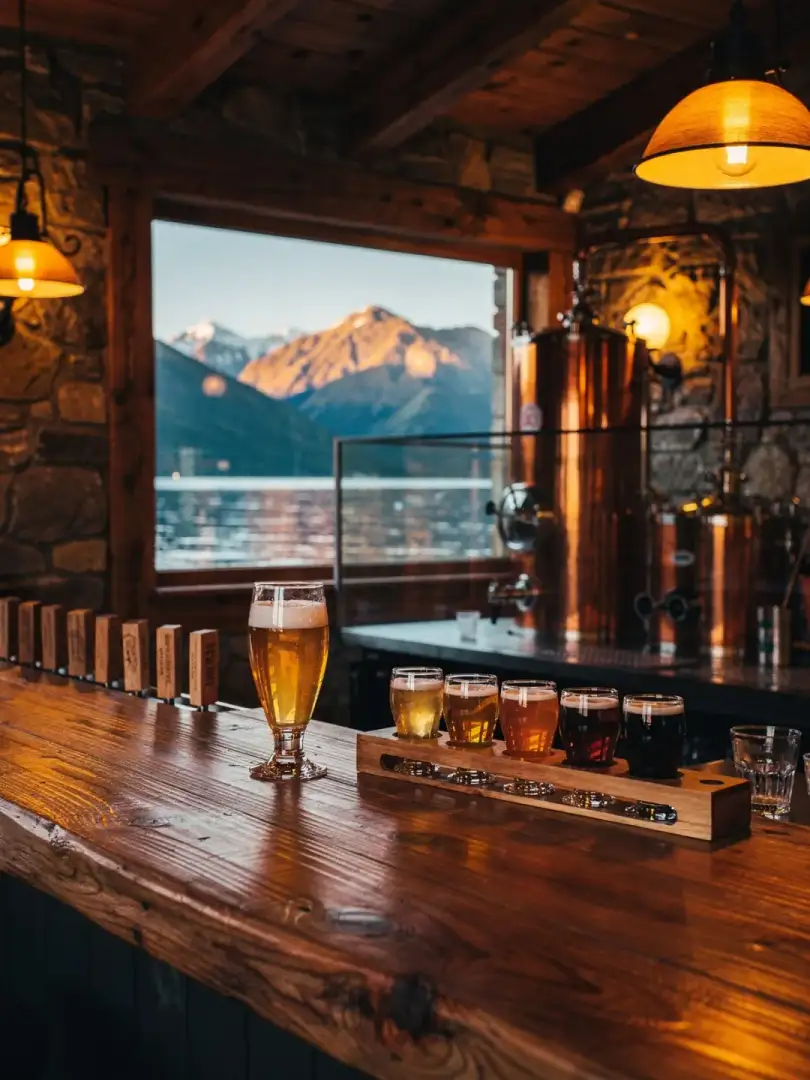
Pint & Tulip Glass
Tasting
A Pale Ale from El Bolsón smells first of citrus peel and fresh grass, followed by a light malty sweetness, with a finish that's bitter but never harsh. With an IPA, the hops push further forward: grapefruit, resin, and a long, dry aftertaste.
Three names from the region's history serve as good examples. Blest in Bariloche is considered the city's first brewery and has been on the market since 1989. Otto Tipp represents the early days in El Bolsón and is known today mainly as a historic name. In Colonia Suiza near Bariloche, Rincón Patagónico also runs its own small brewery alongside its restaurant.
In Argentina, beer is often served in the "pinta," a pint glass similar to the British pint. For more aromatic beers like IPA, tulip-shaped glasses also work well, since the curved shape traps the hop aroma right beneath the nose.
Temperature shouldn't be too cold. A Pale Ale shows its aromas best around 6 to 8 degrees Celsius, while an IPA can be served one or two degrees warmer still. Served ice-cold, the aroma that the hops worked so hard to deliver simply disappears. When tasting, small sips work best, with a pause to let the first impression fade, since the bitterness often only shows up in the aftertaste.
When pouring, tilt the glass and let the beer run down the side, then straighten it up and leave about two fingers of foam on top. The foam traps the aroma and holds it in the glass. Between beers, drink water and eat a bit of bread to reset the palate.