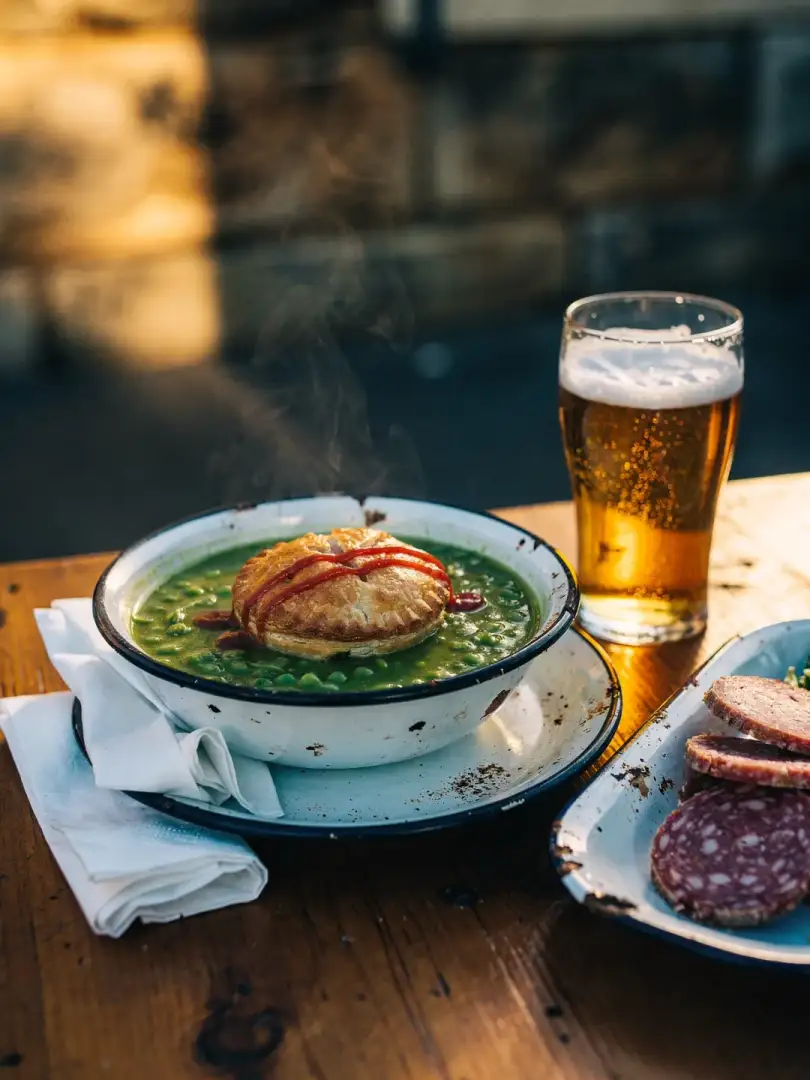
Pie floater, Barossa
Food & Beer Culture
What is a pie floater? A meat pie placed upside down in a deep bowl of thick green pea purée, usually topped with tomato sauce. The dish is considered Adelaide's signature street food. It's traditionally sold from pie carts, which have been a fixture of the city since the 1860s. It's said to have been invented in the 1890s by Ern “Shorty” Bradley.
The most famous pie cart was Cowley's pie cart. In 2003, the National Trust of Australia listed the pie floater among South Australia's heritage icons. It pairs well with beer because the meat, pastry, and peas are rich and salty, the carbonation in a Sparkling Ale cuts through and cleanses the palate, and the salt leaves you thirsty for the next sip.
The wine country on Adelaide's doorstep has shaped the local cuisine, too. German settlers arrived in the Barossa Valley and the Adelaide Hills from the 1830s and 1840s onward, with Hahndorf founded in 1839. From them come Barossa mettwurst, breads, and baked goods that appear alongside beer and wine on Adelaide tables. Even the fritz, Adelaide's beloved sandwich fritz sausage, carries a German name.
At the pub, you order a parma, a chicken schnitzel breaded and topped with tomato sauce and cheese, served with chips and salad. The beer comes in a schooner, and as everywhere in Australia, the round gets paid for in turn.
Why is the schooner so small here? A common explanation traces back to World War II. The federal government raised beer taxes, and New South Wales, Queensland, and Western Australia raised their prices accordingly, while South Australia kept prices steady and shrank the glasses instead. The small glasses have stuck around ever since.