Hills and the Murray
Water & Soil
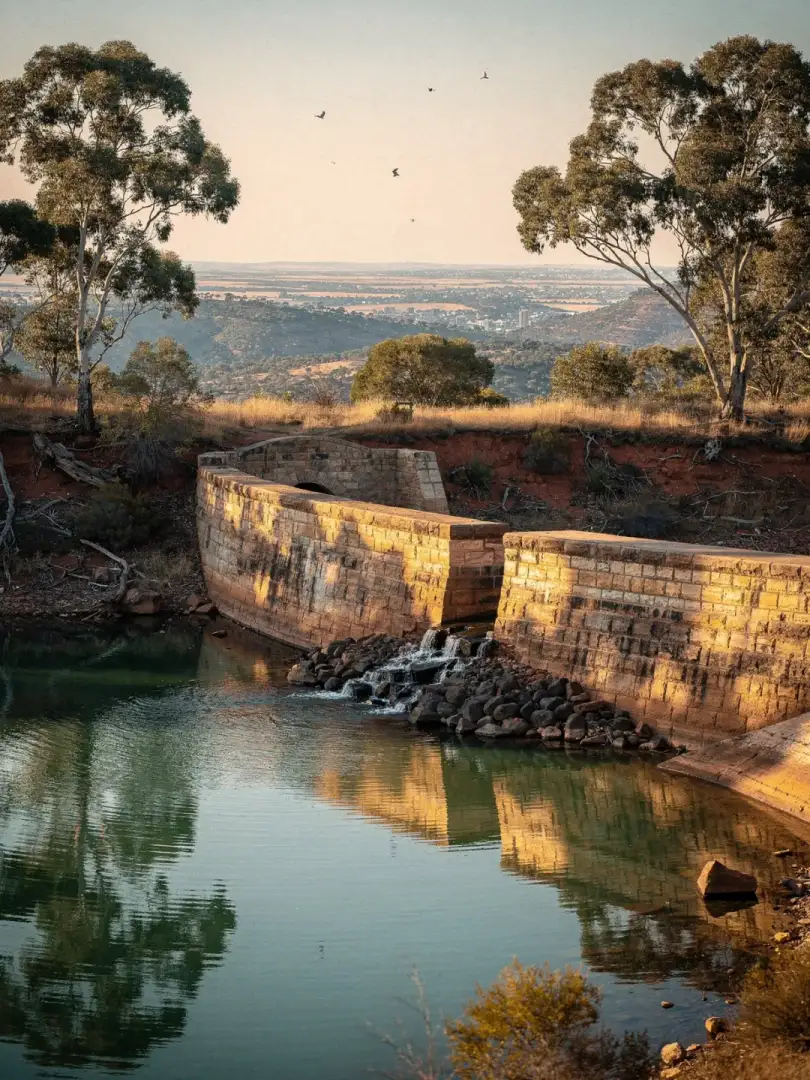
Where does the water for Adelaide's beer come from? The city lies between the Gulf St Vincent and the Mount Lofty Ranges, and its drinking water comes from reservoirs in these hills and, to a greatly varying degree depending on the year, from the River Murray. In dry years, water becomes scarce across the whole state, and breweries too must manage carefully.
The climate is Mediterranean. Winters stay mild and damp, summers are hot and dry, and temperatures above 35 degrees are nothing unusual. That explains why beer here is drunk ice-cold, and why a small glass that won't warm up quickly makes more sense than a large one.
Brewers take from the tap water only what suits the recipe, adjusting minerals and acidity as needed. A Pale Ale and a Stout require different water profiles, since dark, roasted malt brings its own acidity, while pale malt needs a little help. That's no different in Adelaide than in Burton or Pilsen.
The soil around the city works mainly for wine. Vines grow in the Adelaide Hills, the Barossa Valley and the Clare Valley, while grain grows on the plains to the north and west of the hills. The barley that ends up in beer grows in South Australia's inland fields, not in wine country.
Bottle conditioning needs warmth. The yeast in the bottle works at room temperature to give the beer its carbonation, then rests in the cold afterwards. A hot summer day in the car can wake it up again, so the bottle should go straight into the fridge after shopping.