Sand, Seawater, Limestone
Water & Soil
Perth sits on sand. The coastal plain between the Indian Ocean and the Darling Scarp, the ridge east of the city, consists of porous soils where groundwater collects. Part of the region's drinking water comes from there, part from reservoirs in the hills, and since 2006 a plant in Kwinana has also been drawing drinking water from seawater.
What does this mean for beer? Brewers rarely cite hardness figures, and nowadays almost every brewery treats its water anyway: removing salts or adding them until the water suits the style. This holds true in Fremantle just as much as in Perth or Margaret River. For pale beers like Pale Ale and Lager, neutral water matters most, letting malt and hops set the tone.
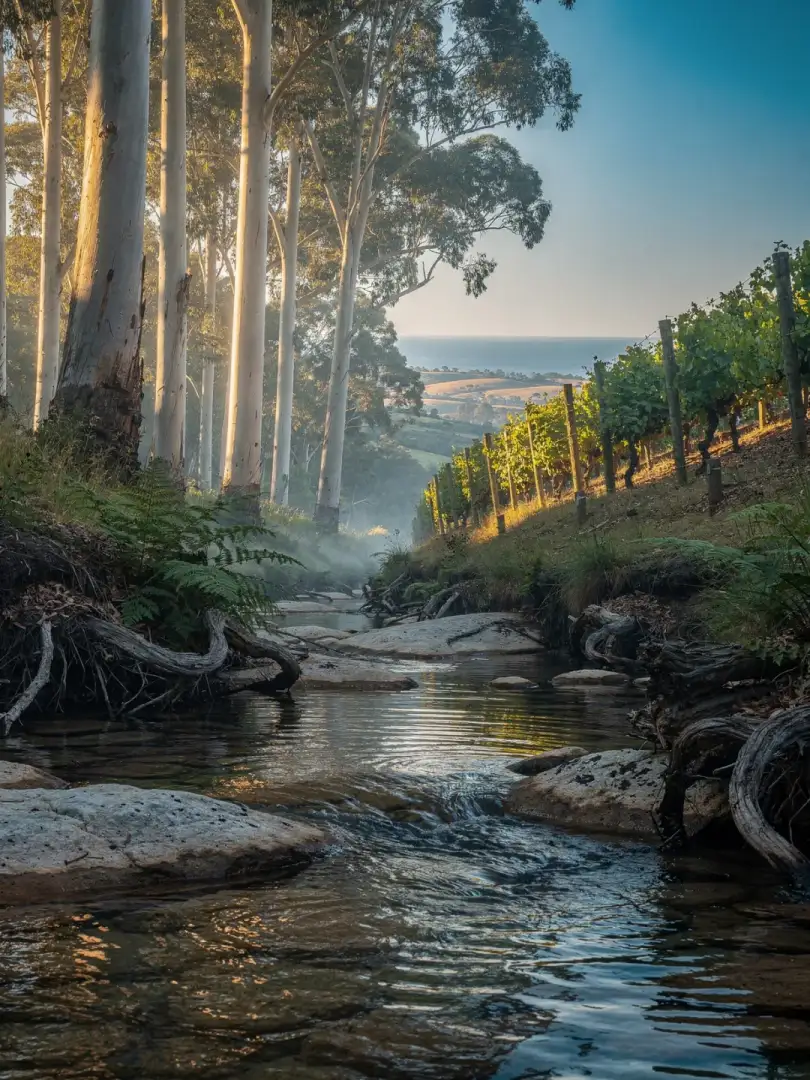
The land itself is more interesting. In the Swan Valley northeast of Perth, wine has been grown since colonial times, and roughly 200 kilometers further south lies Margaret River, nestled among karri forests, limestone caves, and crashing surf. Among the wineries, Colonial Brewing Co., Eagle Bay Brewing, Cheeky Monkey, Black Brewing, and Bootleg have all opened their own breweries.
The climate is Mediterranean: hot, dry summers and mild, wet winters. Many afternoons bring the Fremantle Doctor, a cool southwesterly wind off the sea that pulls the city out of the heat. Brewers can't rely on it, though, since the wind only arrives in the afternoon while fermentation runs around the clock. Anyone brewing lager in Fremantle's heat needs electricity and cooling systems. Instead of a rock cellar, glycol jackets (sleeves through which chilled liquid flows) cool the fermentation tanks, allowing lager to mature at low temperatures even in the height of summer.