Bottle Conditioning, Warmth
Yeast & Fermentation
Why does Duvel taste of pear, spice and banana? It's the yeast. The beer ferments top-fermenting, at warm temperatures, and the yeast produces fruity esters and peppery notes. The result is a beer that's pale in color and high in strength, yet full of aroma without being sweet.
Duvel Moortgat tells the story of how Albert Moortgat encountered British ale during the First World War, traveled to Scotland, and brought back a yeast strain from there. After the war ended in 1918, he brewed the beer under the name 'Victory Ale.' In 1923, a friend is said to have remarked that it was 'nen echten Duvel,' a true devil.
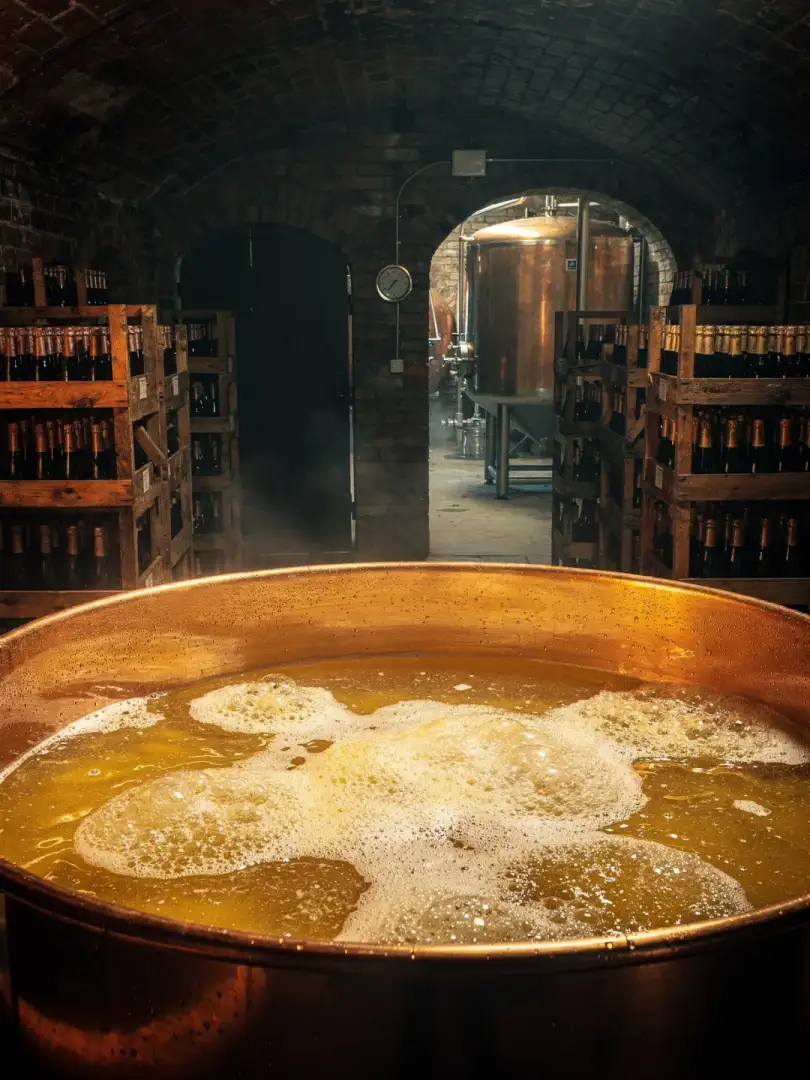
According to the brewery, the beer first matures cold, at around minus 2 degrees Celsius, then is bottled with fresh yeast and sugar added. It continues fermenting in the bottle for about two weeks in warm rooms at around 24 degrees Celsius. This is where the carbonation develops.
Westmalle, according to the abbey, also conditions its beers with a secondary fermentation in the bottle. The yeast forms a fine sediment, and the head stays firm and creamy. Achel and Gouden Carolus Classic likewise rely on top-fermenting yeast and bottle conditioning.
City brewery De Koninck brews top-fermenting beer; its Bolleke is an everyday beer that goes straight into glasses without a long wait. Bottle conditioning isn't needed for that. Accordingly, it's simple in the glass: a clear beer meant to be drunk briskly. The difference from Duvel and Westmalle, then, lies mainly in the bottling and conditioning time, not in the type of yeast.