Bolleke, Tulip, Chalice
Tasting
What does a Belgian Tripel taste like? Yellow to golden in color, with a firm white head, aromas of pear, pepper and spice, sweet at first, dry at the finish. Westmalle Tripel is the best-known example, while Gouden Carolus Tripel from Mechelen offers a secular counterpart.
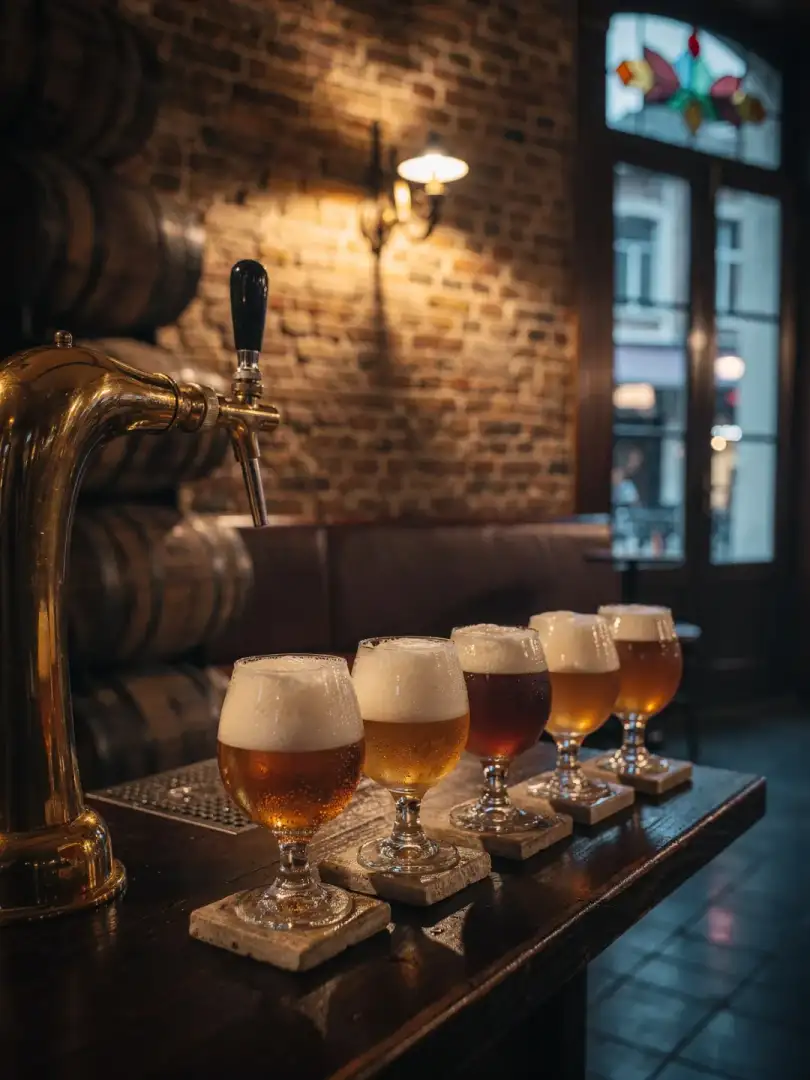
Duvel, by comparison, is paler, livelier and crisper. A tulip-shaped glass helps when pouring, as it holds the head and gathers the aroma. The beer should be poured slowly from the bottle at first, so the yeast sediment stays at the bottom and the beer doesn't turn cloudy. Tastes vary; those who enjoy the yeast pour the rest in too.
Bolleke, on the other hand, is drunk from the glass that gave it its name. The small, round, ball-shaped glass was introduced in 1952; 'Bolleke' comes from the Brabant dialect and means 'little ball.' It shows off the amber color, the head and the aroma, and swirling it brings out malty notes. De Koninck was in fact the beer's own name until 2019.
On temperature: these strong beers are best served cool rather than ice-cold, roughly between 8 and 12 degrees Celsius, since the aromas fall flat otherwise. The colder a beer is, the less you taste of its fruit and spice.
Achel Blond and Achel Bruin are further beers from the region worth tasting side by side, even though they're no longer certified as Trappist beer. The brewery describes the Blond as light and the Bruin as maltier, making it easy to experience the difference between pale and dark in one place.