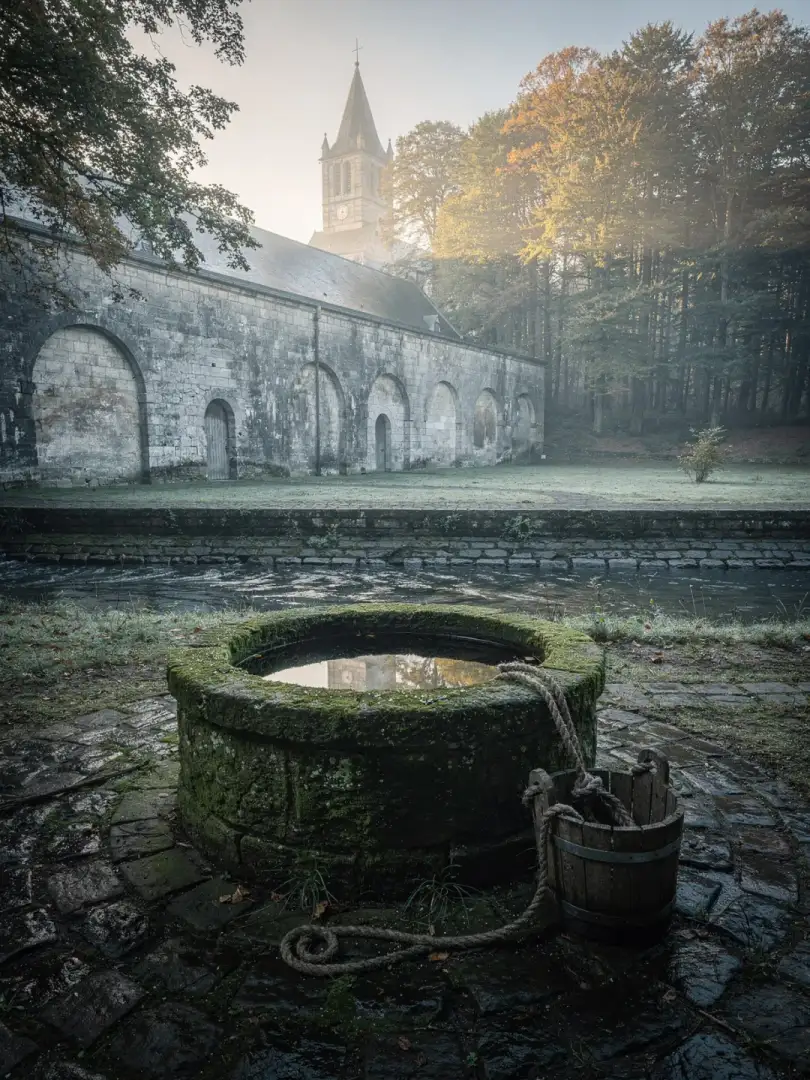
A Well Within the Monastery
Water & Soil
Where does the water for Chimay come from? The abbey draws it from a well within the monastery walls. This fits with Trappist rules, which call for brewing to take place where the monks live, and it explains why the brewery feels almost like part of the monastery itself.
The Scourmont plateau lies in southern Hainaut, close to the French border. The abbey and its brewery sit on the same grounds, so the path from well to brew kettle is short, and the monks can oversee the source of their water themselves.
A broader insight matters more here: water shapes a beer mainly through its dissolved minerals. Very soft water makes hops and malt taste leaner, while hard water emphasizes bitterness. Today almost every brewery treats its water, through softening or the addition of salts. So water no longer defines a style the way old textbooks claim.
On the farms, the soil determined something else entirely: what grew. Barley and hops stood in the fields, and water came from the farm's own well, so each farm ended up with its own beer.
Then there was the cellar. Tradition holds that a saison was brewed in winter and stored cool, so it would still be fresh come summer. That's why the style is also called a keeping beer. Dupont still lets its saisons referment in the bottle today, so the carbonation forms there rather than in a tank.