Flatland by the Sea
Water & Soil
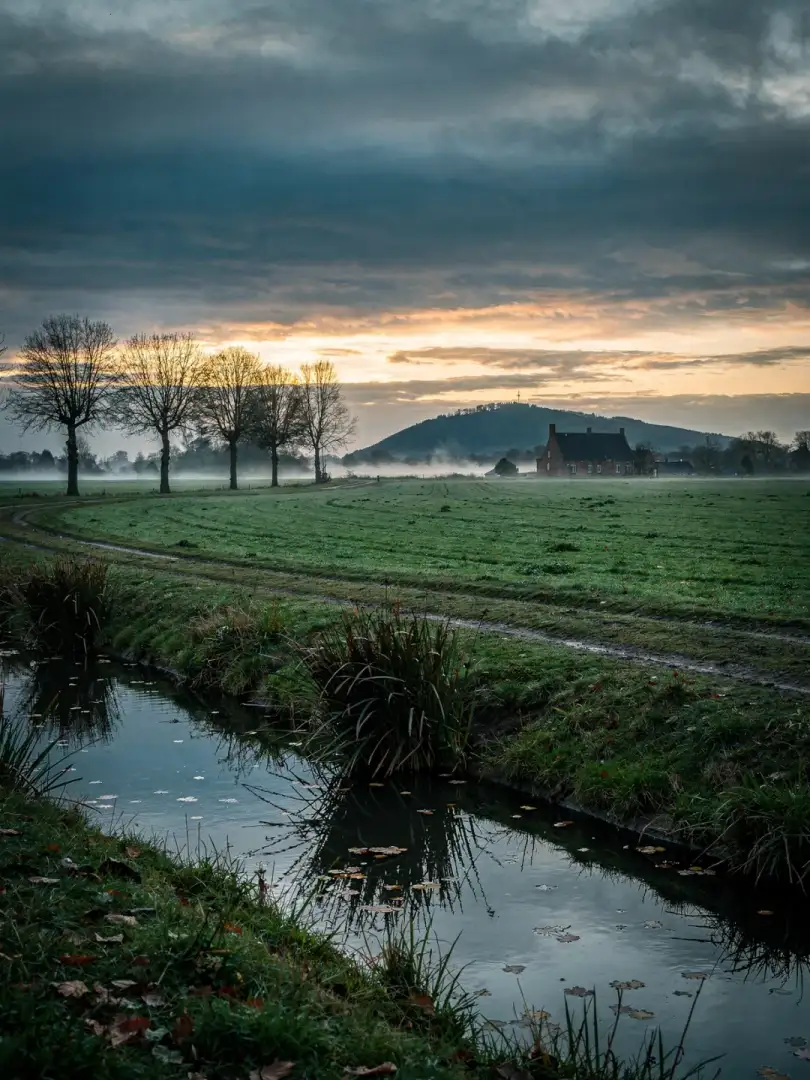
Looking north from the Kemmelberg, you can see just how flat the Westhoek really is. Only a few gentle hills around Heuvelland and Watou break up the land, which lies not far from the North Sea. The climate is maritime: mild, often damp, and rarely very hot.
That's a good setup for hops and barley. The plants get plenty of rain, and summers stay cool enough that the cones don't scorch. The water itself, though, shapes the beer far less than people assume.
Why? Strong Belgian beers like Westvleteren 12 are so malty, spicy, and alcohol-rich that the water in the glass barely comes through. What's more, nearly every brewery today treats its water — softening it, desalinating it, or adding minerals as needed. The old idea that "the water makes the style" is history, not current practice.
More important than brewing water is the water in the weather. The humid air shapes hop growing around Poperinge and the way beer ages in the region. Westvleteren, for instance, undergoes bottle conditioning. Such bottles like it cool and dark, and the Westhoek, with its small cellars and attics, has always offered exactly that. The hop stores under farmhouse roofs benefit from the same coolness, since dried hops quickly lose their aroma when kept warm.
To this day, the woods of Sint-Sixtus define the area. They shield the abbey from the wind, and behind them the beer matures in a stillness you can sense in the place itself.