Botequim & Bauernfest
Food & Beer Culture
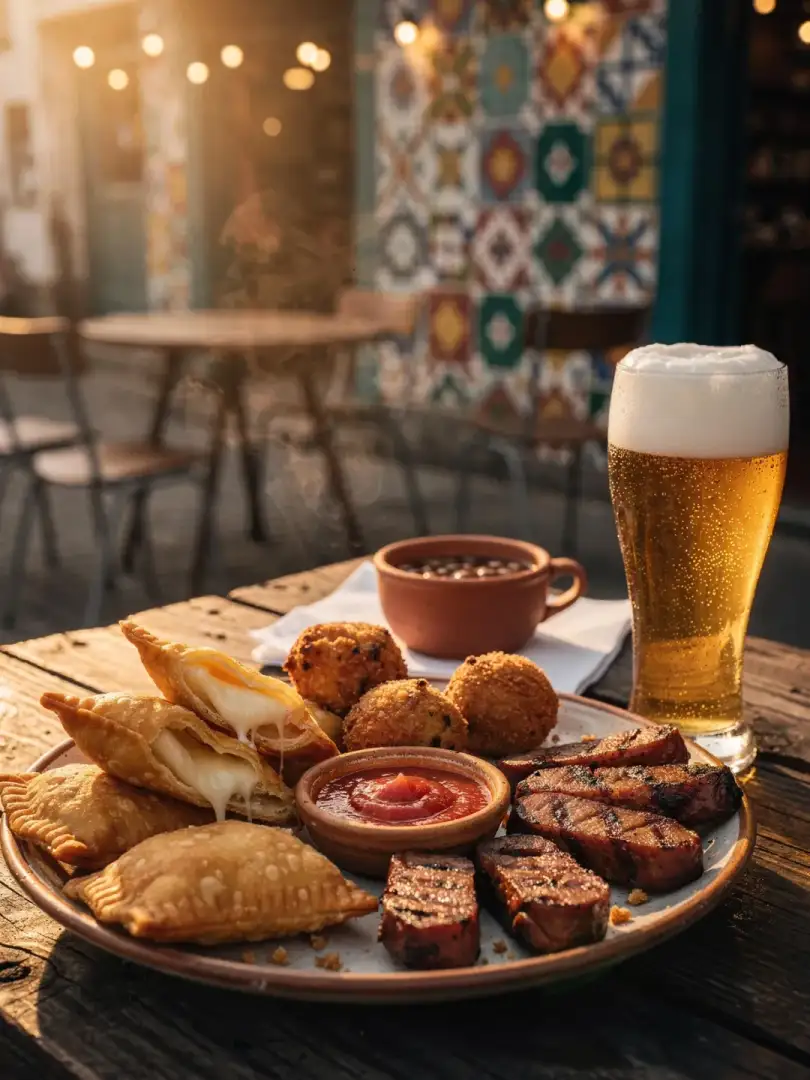
Where do people in Rio drink their beer? In the botequim, the corner bar with its counter and plastic chairs, where you stand or sit on the sidewalk and call out to the waiter. There, beer is paired with petiscos, the small bites of the bars: pastel, a fried pastry pocket filled with cheese or meat, bolinho de bacalhau, codfish fritters, and linguiça, grilled sausage.
Caldinho de feijão, a hot bean broth served in a cup, is also common alongside chopp, as the salt pairs well with the cold. Fat and salt in the food soften the chill of the glass, and the lean beer washes the palate clean again.
The city's chopp culture dates back to the 19th century. The German tavern Zum Schlauch, opened in 1887, is considered a trailblazer and reportedly became Bar Luiz, still celebrated as one of Rio's most traditional chopp spots. Bar Real Chopp in Copacabana received a plaque as Patrimônio Cultural Carioca, a cultural heritage designation of the city.
In Petrópolis, June brings the Bauernfest, in Portuguese Festa do Colono Alemão, the Festival of the German Settlers. It commemorates the 19th-century colonists with music, dance, sausage, and beer. According to the organizers, it ranks among the largest events of its kind in Brazil.
At the end of an evening, you order the saideira, the "last round," a custom every Carioca knows. It's counted in tulipas, not liters. There's a rhythm to it too: order a round, wait a bit, and once the table is empty, the next one arrives.