Cold, Coffee, Rapadura
Tasting
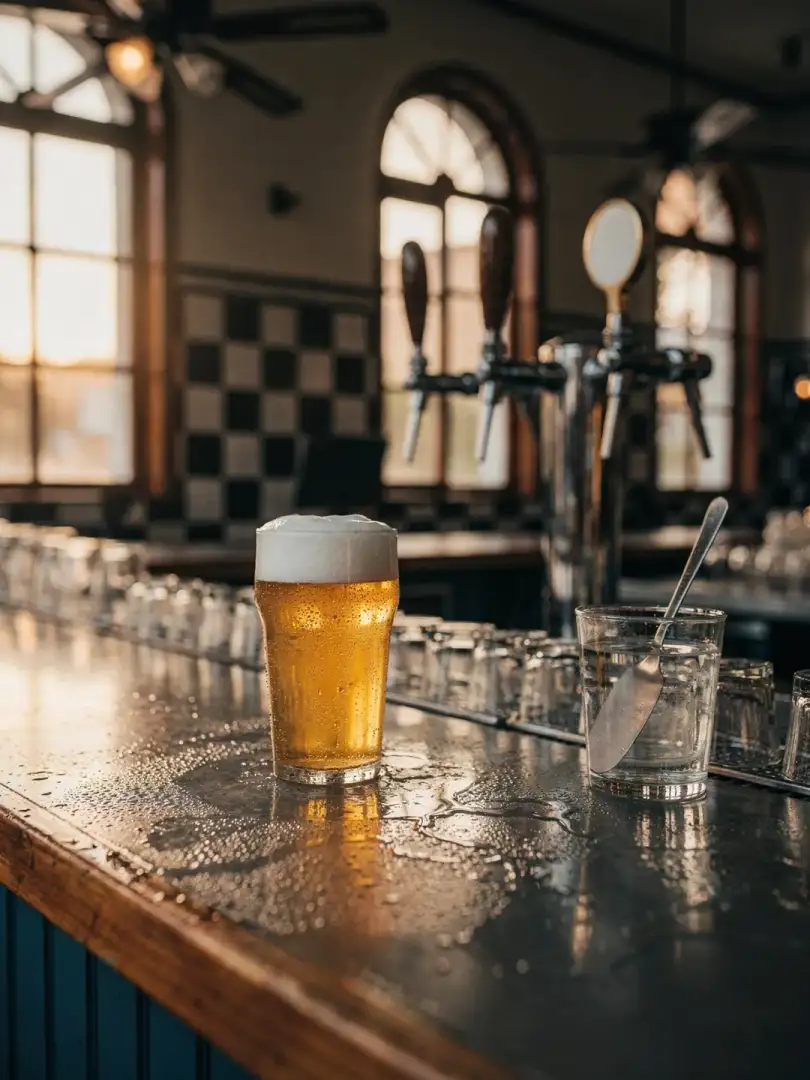
A Chopp at the Pinguim arrives at the table in a small, slender glass fogged with condensation on the outside. The foam, known in Brazil as colarinho, should sit dense and tall. On the palate, the beer tastes lightly of grain, barely of hops, and finishes clean and dry. The cold is part of the flavor.
Anyone who knows the place knows that Antarctica Chopp has been poured there since it opened. The beer is much like the city itself: it thrives on ritual, not rarity. You order a round, and the next one arrives before the glass is even empty.
Colorado Demoiselle shows what the coffee from the Alta Mogiana does in beer. It brings roasted notes and a delicate bitterness to the glass without making the beer heavy. It's best not drunk ice-cold, but noticeably warmer than a Chopp, so the aromas can come through.
Colorado Indica smells of hops, tastes of malt, and carries a light, dark sweetness from the rapadura. In Cauim, as with any starch source, the mandioca is barely detectable in flavor. A tulip or pint glass, familiar from ales, lets the aromas show their best.
Pouring in Brazil follows a particular technique. The bartender tilts the glass to fill it, then straightens it until the colarinho forms. Order a draft beer in a bar here, and you'll get a drink whose foam height is never left to chance.