Rain & Rivers
Water & Soil
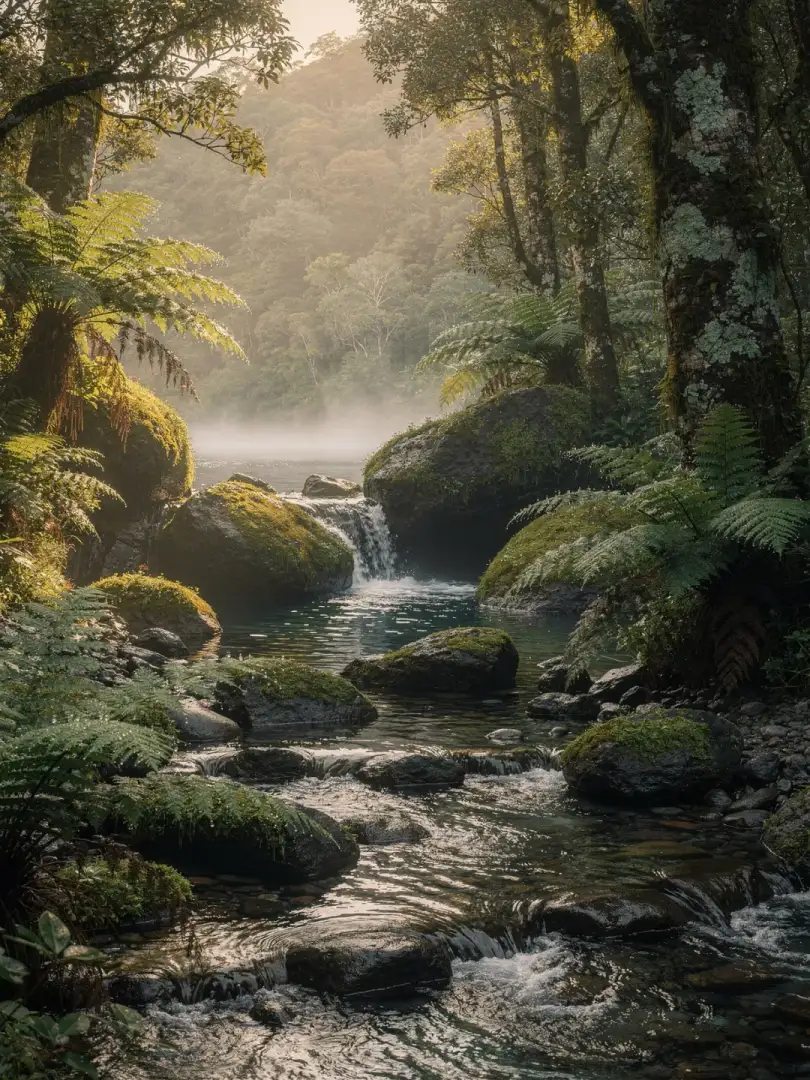
Valdivia sits where the Río Calle-Calle, the Río Cruces, and the Río Valdivia merge into one broad stream. The surrounding area is humid coastal rainforest, the sky often hangs low, and rain is part of everyday life. For a brewery, this is a gift, since water is never in short supply here.
Karl Anwandter's brewery took advantage of this early on. In 1890 it installed a hydroelectric power plant with 900 kilowatts of output, using the region's own power to drive its machinery. In 1898 the family bought a 4,500-hectare estate complete with a reservoir and underground pipelines to secure its own brewing water.
Exactly how hard or soft the water is depends on the place and the source. Soft rain- and river-water lets hops come through clean and clear, as in a pale lager. Since nearly every brewery today treats its water, this factor shapes style less than it once did.
The soil plays a different role, namely in storage. After 1912, the Anwandter brewery had nine underground cellars with a combined capacity of six million liters. Underground, it stays cool and steady even in summer, exactly what bottom-fermented beers need for proper aging.
The Lake District further north, around Panguipulli and Lake Llanquihue, offers similar conditions. Volcanoes, glacial lakes, and heavy rainfall feed rivers and groundwater alike, and in Panguipulli, the small brewery 7 Lagos brews right on the lakeshore.