Cold Fermentation, German Style
Yeast & Fermentation
Is Tsingtao top- or bottom-fermented? Bottom-fermented, like all lagers. The yeast works at cool temperatures of around 8 to 12 degrees Celsius, settles at the bottom at the end of fermentation, and delivers a clean beer without fruity aromas. According to the brewery, the yeast originates from Germany.
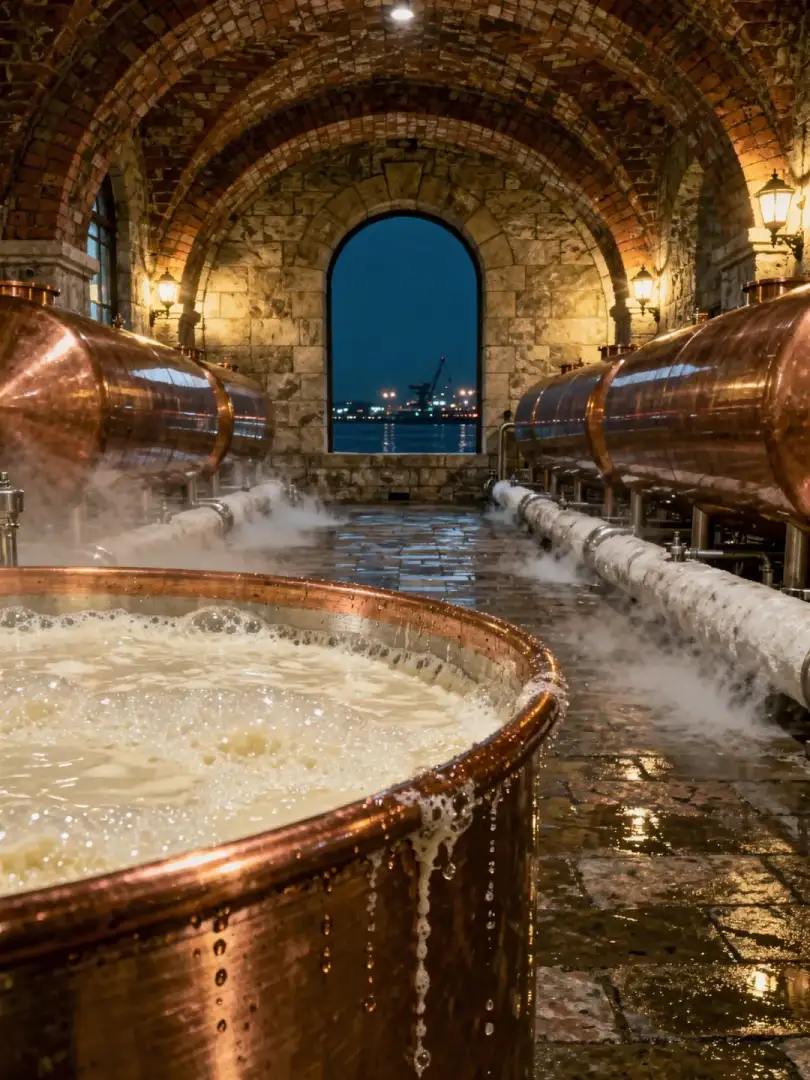
This is a legacy from the brewery's founding era. The founders of the Germania Brewery brought machinery in 1903, along with the method of cold fermentation using pure-cultured yeast, which had only become common in Europe a few decades earlier. It made it possible to brew a stable beer even in the humid, hot coastal climate, as long as the fermentation cellar was kept cool.
After primary fermentation, the young beer is cold-stored for several weeks. During this time, it clarifies, and compounds like diacetyl, which taste of butter, break down. This is exactly where the term lager comes from: the beer is lagered, or stored, before it's drunk.
Modern large-scale breweries have replaced cellars with jacketed steel tanks. Fermentation runs faster than it once did, filtration removes yeast and haze, and the result is a clear, shelf-stable beer. In Qingdao, you can also find fresh draft beer, dispensed straight from the brewery tank into glasses or into bags, which is lagered for a shorter time.
Set Tsingtao next to a Kölsch and the difference becomes clear: Kölsch ferments warm with top-fermenting yeast and is then cold-conditioned, while Tsingtao ferments cold from the start. Both are clear and pale, but one carries fruity notes while the other leans toward malt.