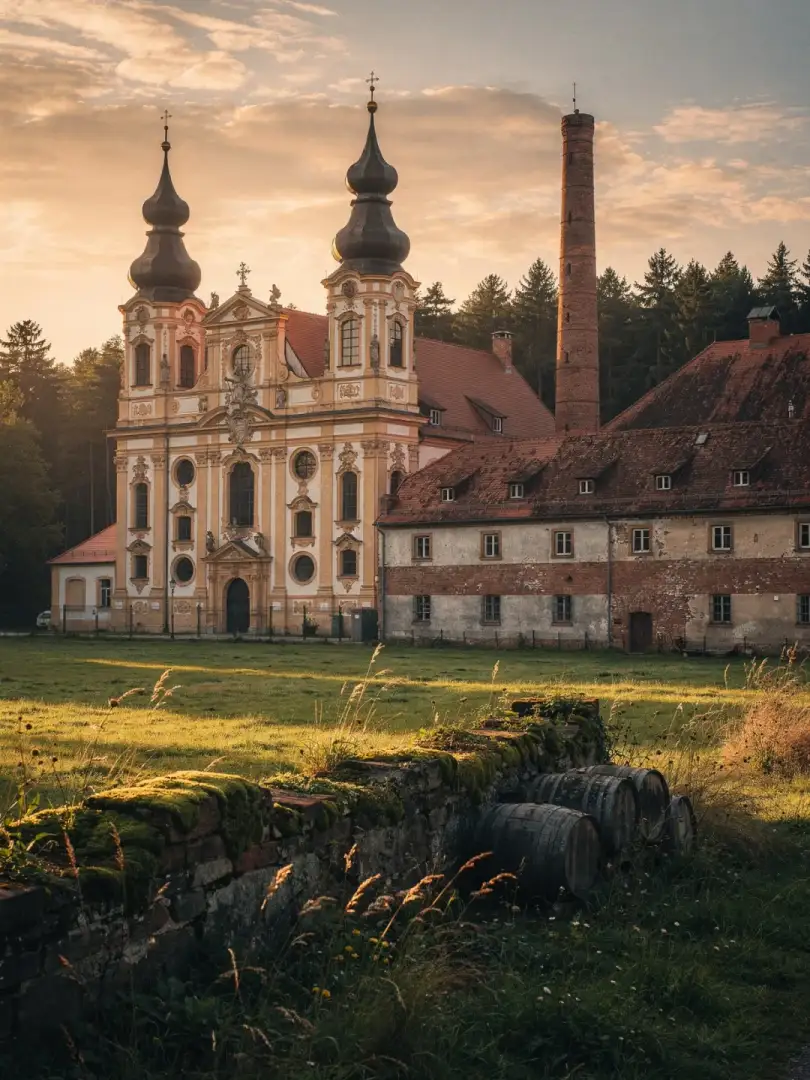
Monastery, dispute, joint-stock brewery
Region & History
Anyone wanting to know how Brandenburg came by its most famous beer should head to Neuzelle near Eisenhüttenstadt. Cistercian monks founded their monastery there in 1268. Records show that in 1589, with permission from Emperor Rudolf II, the monks were allowed to sell their beer in the surrounding area. Klosterbrauerei Neuzelle still stands on this site today.
Its Schwarzer Abt made the brewery famous nationwide—in a courtroom. The Brandenburg Beer War began after 1993, when West German beer law was extended to the east. According to the brewery, this Schwarzbier contains up to two percent invert sugar syrup, a type of sugar not permitted in bottom-fermented beer. The application for an exemption was rejected, and for a time the brewery dropped the word "Bier" from its label.
In 2003, Neuzelle put the word back on the label. In February 2005, the Federal Administrative Court in Leipzig ruled in the brewery's favor in an expedited appeal. The presiding judge, Hans-Joachim Driehaus, summed it up this way: the Schwarzer Abt was a special beer and could be brewed and sold under that name. With that, a dispute over a single word came to an end after some 13 years.
A very different story unfolds in Upper Lusatia. In Görlitz, the Görlitzer Aktien-Brauerei was founded in 1869, the forerunner of today's Landskron Brau-Manufaktur. In its very first year of business, it produced 27,000 hectoliters, and by 1908 output had reached 100,000 for the first time. The brewery had the Landskron trademark registered in 1882.
In Löbau, Saxony, the story of Bergquell Brewery began in 1846. The joint-stock company became a state-owned enterprise in 1972, and in 1999 Steffen Dittmar took over a brewery producing 7,000 hectoliters a year. Today that figure stands at around 200,000. None of these beers carries EU protected designation of origin status. Depending on the source, Brandenburg is home to a good two dozen small breweries.