Long Fermentation Times
Yeast & Fermentation
What does yeast do in beer? It consumes the sugar in the wort, the dissolved malt mass before fermentation, and converts it into alcohol and carbon dioxide. Coburg's Landbier and Pils beers are bottom-fermented: the yeast works at low temperatures of just a few degrees and settles to the bottom at the end.
Brauerei Schleicher says it places importance on long fermentation times. This is no minor detail. Giving yeast time results in a rounder-tasting beer, less green apple and more bread and malt. Beer brewed too quickly, by contrast, often tastes rougher and unfinished.
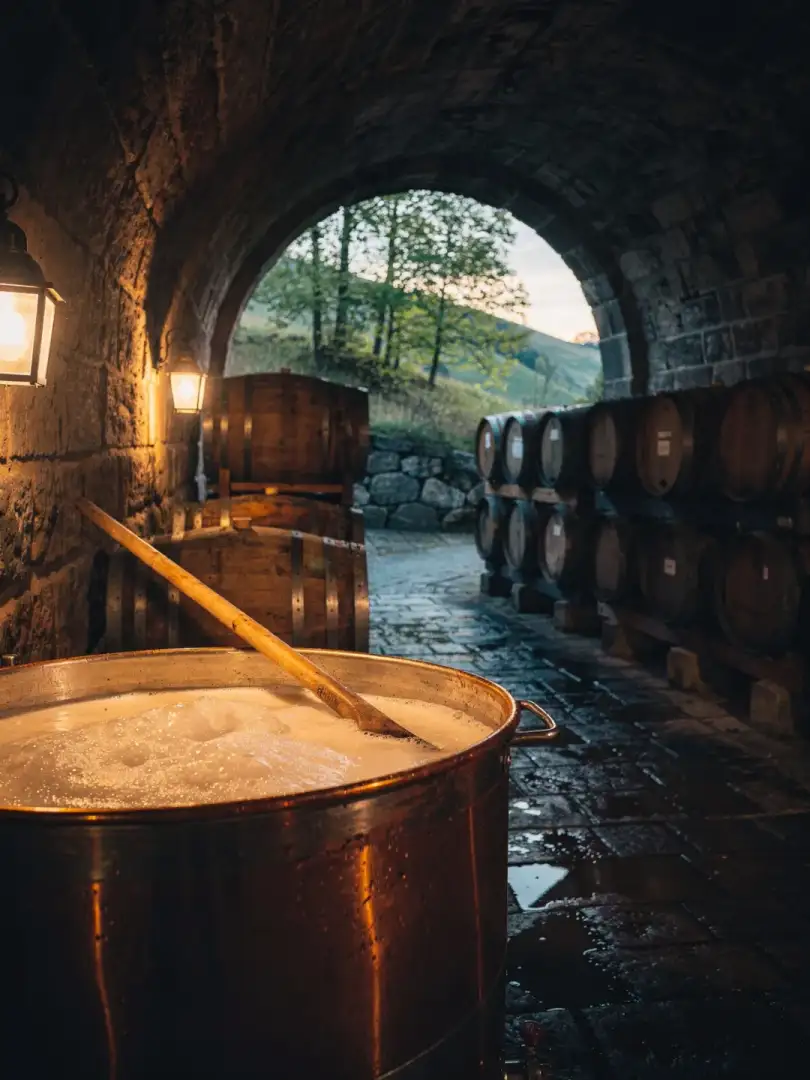
After primary fermentation comes lagering. In the past this happened in hillside cellars; today it mostly takes place in tanks, but the idea is the same: the beer rests cold for weeks, the yeast settles out, the carbon dioxide binds, and the beer becomes clearer and noticeably milder in flavor.
Some breweries also bottle Kellerbier. This refers to beer that hasn't been filtered and therefore appears slightly cloudy in the glass, with yeast and more pronounced character. It's not a matter of different ingredients but of how the beer is bottled, and the base style's specifications remain the same.
Why this matters for flavor becomes clear in a side-by-side comparison: a beer that's been allowed to mature smells clean and tastes smooth, while one that's too young can still taste of butter or green apple. These off-flavors only fade with time.