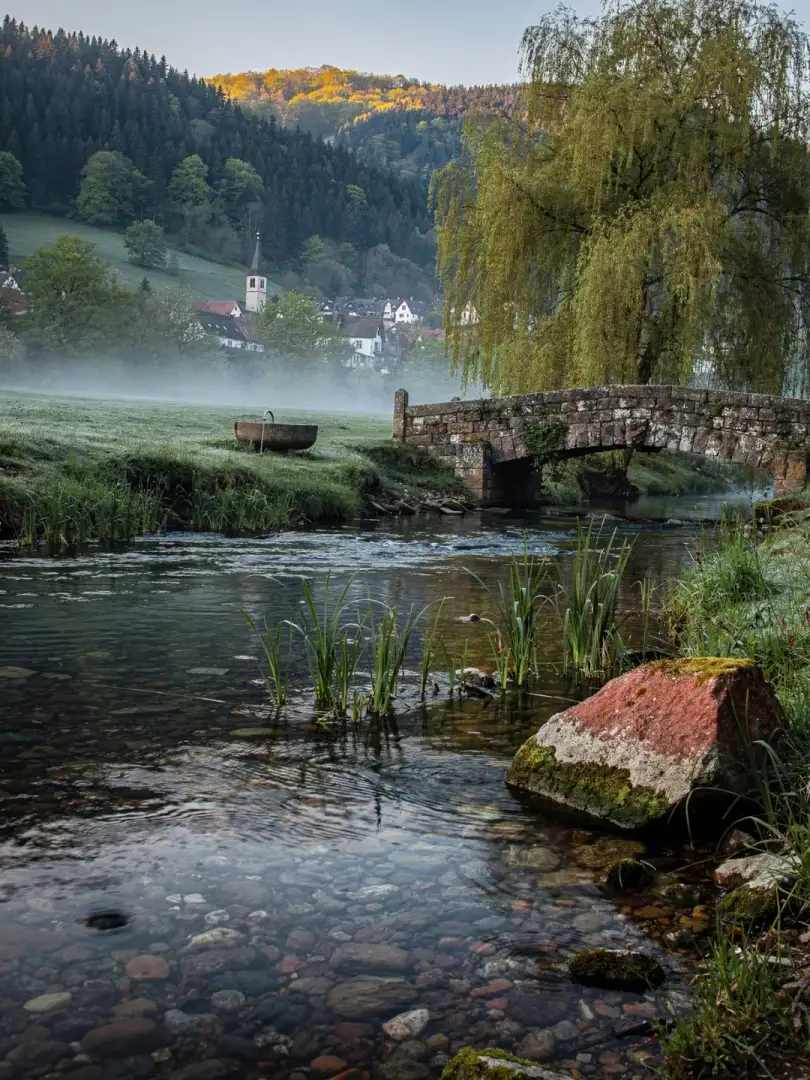
The Itz and Sandstone
Water & Soil
The Itz, a tributary of the Main, rises in Thuringia and flows south through the Coburg region. The valley it carved gives the Itzgrund its name: gentle hills, meadows, villages with small breweries. The water simply flows across a border that was long a political divide.
Each brewery sources its brewing water independently, and there's no single hardness figure for the district as a whole, so none is given here. What's known is that breweries today generally treat their water, and that a beer's style is no longer determined by water alone.
The landscape is shaped by sandstone and clay, as in much of Franconia. Brewers once carved cellars into the slopes around Coburg. These stayed cool in summer and frost-free in winter, and taverns stood atop them, serving beer right where it was stored.
Before refrigeration, bottom-fermented beer depended on this natural cold, since it was stored at just a few degrees above freezing. A beer cellar was essentially a small cold-storage house with a tap, and the sheer number of them in 19th-century Coburg reflects just how many breweries existed at the time.
Anyone wanting to experience this today should head to one of the hillside cellars on a warm day. The beer arrives cool at the table without anyone having to lift a finger. The slope, the cask, and the shade of the chestnut trees provide all the cooling needed, and that's exactly why Franconia's cellar taverns have endured for so many generations.