Warm, Then Cool
Yeast & Fermentation
Whether Altbier is top-fermented comes down to the yeast. Top-fermenting means the yeast cells rise to the top during fermentation and work at temperatures around 15 to 20 degrees Celsius. Altbier typically ferments at around 16 degrees, noticeably warmer than a lager, which ferments at 4 to 9 degrees.
Warm fermentation produces many aroma compounds a bottom-fermented beer lacks: light fruitiness, a touch of spice, sometimes a hint of butter. In Alt, these stay subtle because the beer undergoes cold conditioning after primary fermentation. This cold storage lets the yeast settle out, rounds off the flavor, and makes the beer clearer and drier.
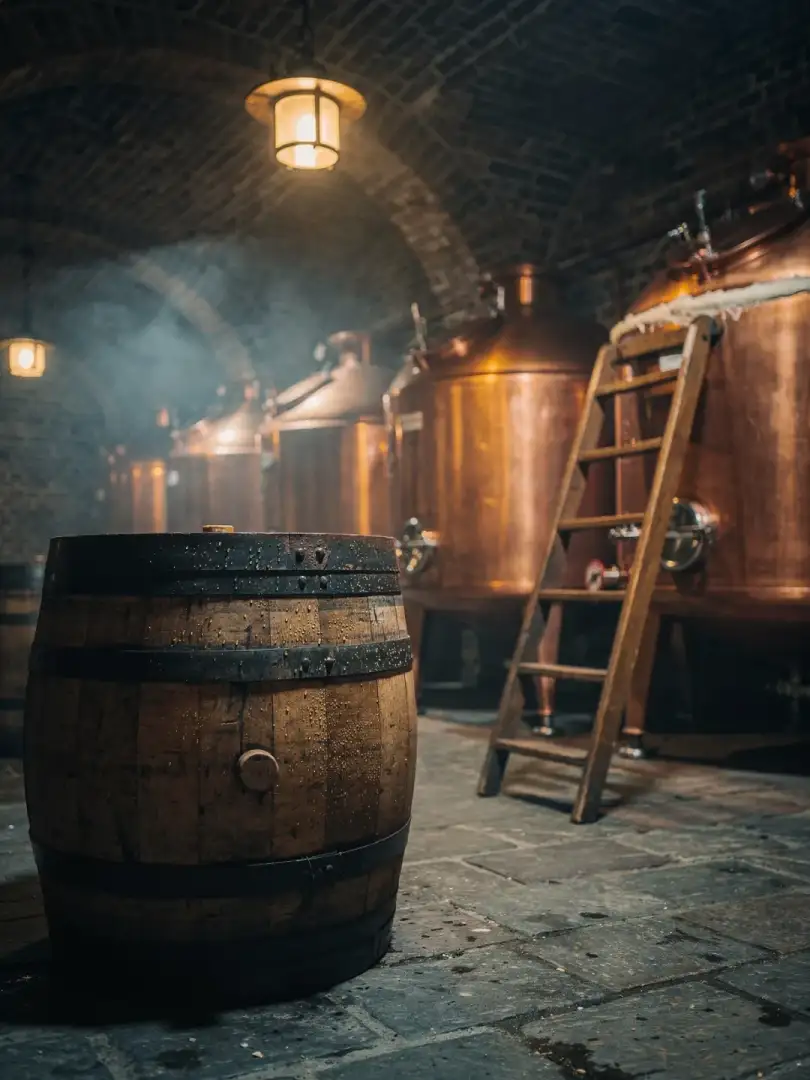
A distinctive feature of the Old Town is the cask. According to the house breweries, Alt here is often still served straight from the wooden cask, something easily observed at houses like Uerige. The breweries don't reveal exactly how long each beer matures, though it's typically several weeks.
Sticke goes a step further. Its name derives from the Low German word "stickum," meaning "secretly," since it used to be poured only for regulars. It carries more alcohol, usually around 5.5 percent, and is tapped just twice a year, in January and October. Guests then flock to the Old Town to try it fresh from the cask before it runs dry within hours or days.