The Mountain Town's Original Beer
Region & History
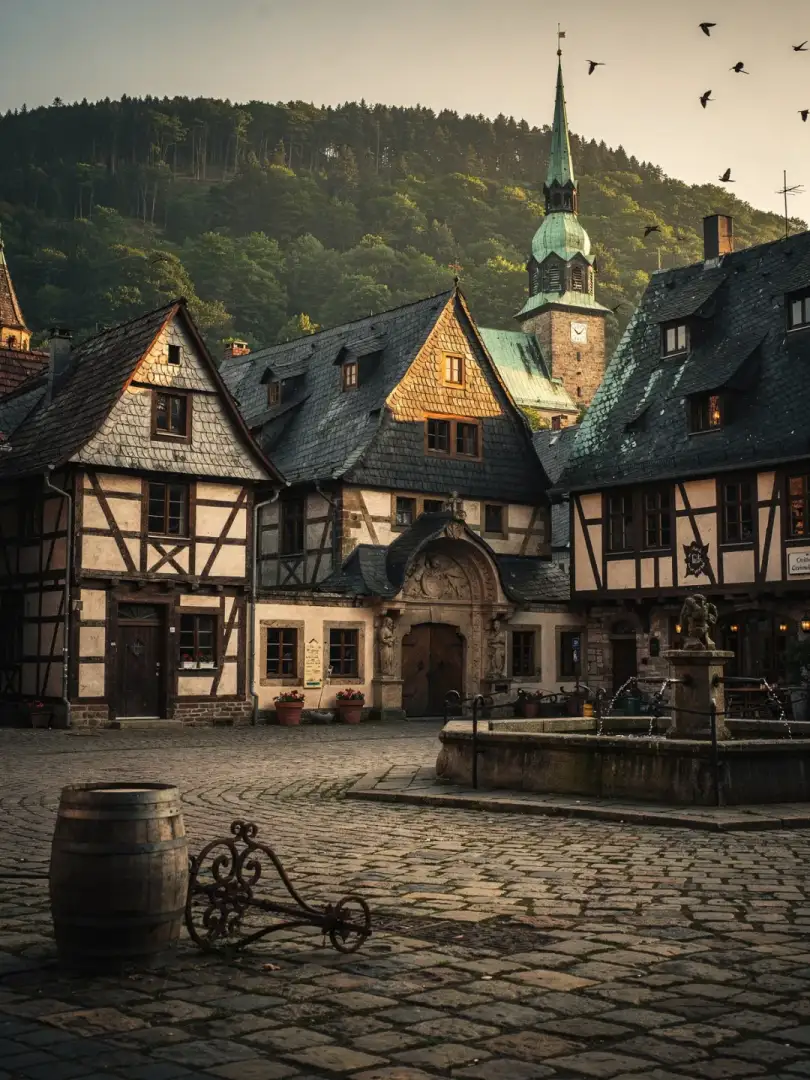
Where does Gose come from? The beer originates from Goslar, on the northern edge of the Harz, and most likely takes its name from the little river Gose that once flowed through town. The common belief that it's primarily a Leipzig beer is a widespread misconception. In the Leipzig, Halle and Dessau area it only became established in the 18th century; its true origin lies in the Harz.
Goslar was a wealthy town for centuries thanks to ore mining in the Rammelsberg, chiefly silver, copper and lead. Mining ended in 1988, and today both the mine and the old town are UNESCO World Heritage sites. A town full of miners, merchants and an imperial palace had plenty of visitors and plenty of thirst, and beer was simply part of daily life.
Some sources cite 1397 as the first written mention of Gose, though this can't be reliably confirmed. What is certain is that Goslar beer was already being sold far beyond the town in medieval times, and distinct Gose styles emerged across the Harz region.
Legally, Gose is a special case. With its salt and coriander, it departs from the Reinheitsgebot (German Purity Law), so it may only be sold as a "special beer." According to the register, Leipziger Gose holds no EU protected designation of origin. So if you see "Gose" on a label, you're looking at a style, not a protected regional product.
Today it's mainly Brauhaus Goslar that brews Gose right in town. Founded in 2004 in a building from 1720 on the market square, it claims to be Goslar's only brewpub. In Wernigerode, a brewery founded in 1872 under the name "Zum Auerhahn" later became Hasseröder, now part of Anheuser-Busch InBev. Smaller operations round things out, including the brewery in Altenau and Brauhaus Lüdde in Quedlinburg.