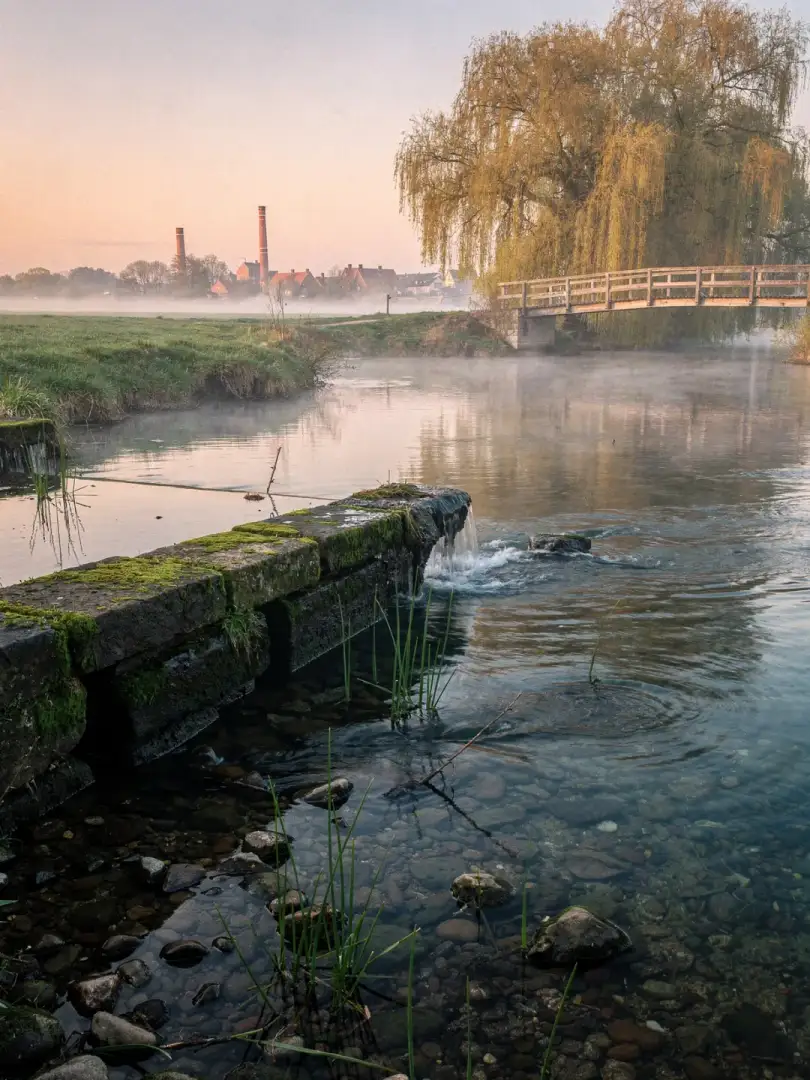
Leine, Oker, Lowlands
Water & Soil
How important is water for beer from Hannover and Braunschweig? Less important today than in the past, since nearly all breweries now treat their water, either softening it or adjusting it with specific salts. We don't have reliable measurements for either city, so we'll stick to what can be said with certainty.
Hannover sits on the Leine, Braunschweig on the Oker, both on the edge of the North German Lowlands. In the Middle Ages, brewers drew from wells and rivers, but how that water tasted back then has not been recorded. No single source known to have shaped a particular style is documented here.
Hard water contains a lot of lime and gypsum; soft water has little. Soft water lets the hop bitterness of a light Pils come across as lean and clean, while lime-rich water better supports dark malts. This fits the region's two faces: the dark Mumme of the past and the pale Pils of today.
Storage, too, depends on the landscape. Where there are no hills, there are no rock cellars, and cool storage on a large scale only became possible once refrigeration machines emerged in the 19th century. That was the era when Hannover and Braunschweig shifted from top-fermented Broyhan to durable, bottom-fermented beers like Pilsener.
Those who drank Broyhan and Braunschweiger Mumme knew nothing of cold chains. The Gilde Brauerei on Hildesheimer Straße now brews with treated water, which means recipe, yeast, and lagering time shape the flavor far more than the well ever did.