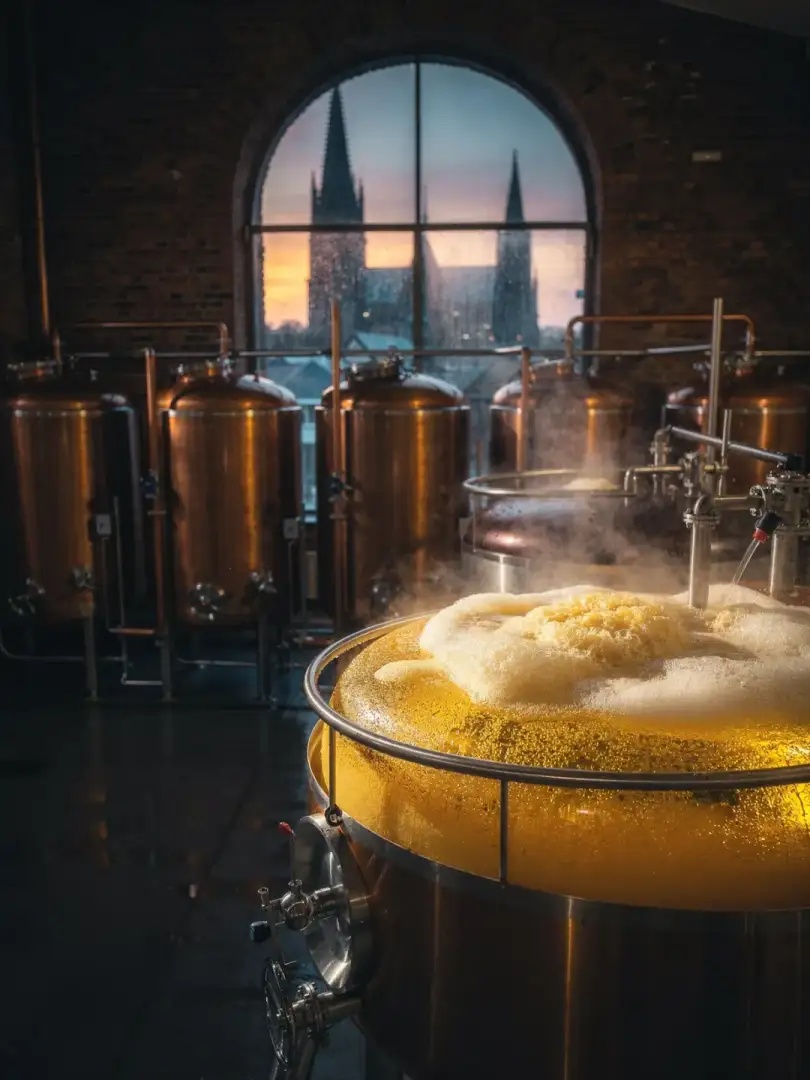
Warm Fermentation, Cold Conditioning
Yeast & Fermentation
Is Kölsch a lager or an ale? A bit of both, and that's exactly why it's confusing. Kölsch is fermented with top-fermenting yeast, meaning a yeast that rises to the surface after fermentation and works best at temperatures of roughly 15 to 20 degrees Celsius. That's the same way Weizenbier or Altbier is brewed. In the brewhouse, nobody minds, since the Kölsch ends up in the Stange either way.
What follows is the part that sets Kölsch apart from classic ales. The young beer is stored cold in tanks for weeks, clarifying naturally in the process. During this cold conditioning, yeast and haze particles settle out, and the delicate fruit notes left behind by the warm fermentation mellow and round out. What results is a beer that tastes as clear and clean as a lager, yet still carries the light fruity touch of a top-fermenting yeast.
Every brewery maintains its own yeast strain and guards it like a family recipe. During fermentation, yeast produces aroma compounds perceived as fruit or a hint of apple and pear, shaping a brand's character far more than most drinkers realize. Two Kölsch beers made with the same malt and hops can therefore taste quite different.
The Convention also requires a 'highly attenuated' beer. This means the yeast converts as much of the malt sugar in the wort as possible into alcohol and carbon dioxide. The more sugar consumed, the drier the beer tastes. That explains why a Kölsch with an original gravity of only around 11 to 12 percent (the sugar content of the wort before fermentation) drinks so light and easy.