Hanseatic Towns & Monks
Region & History
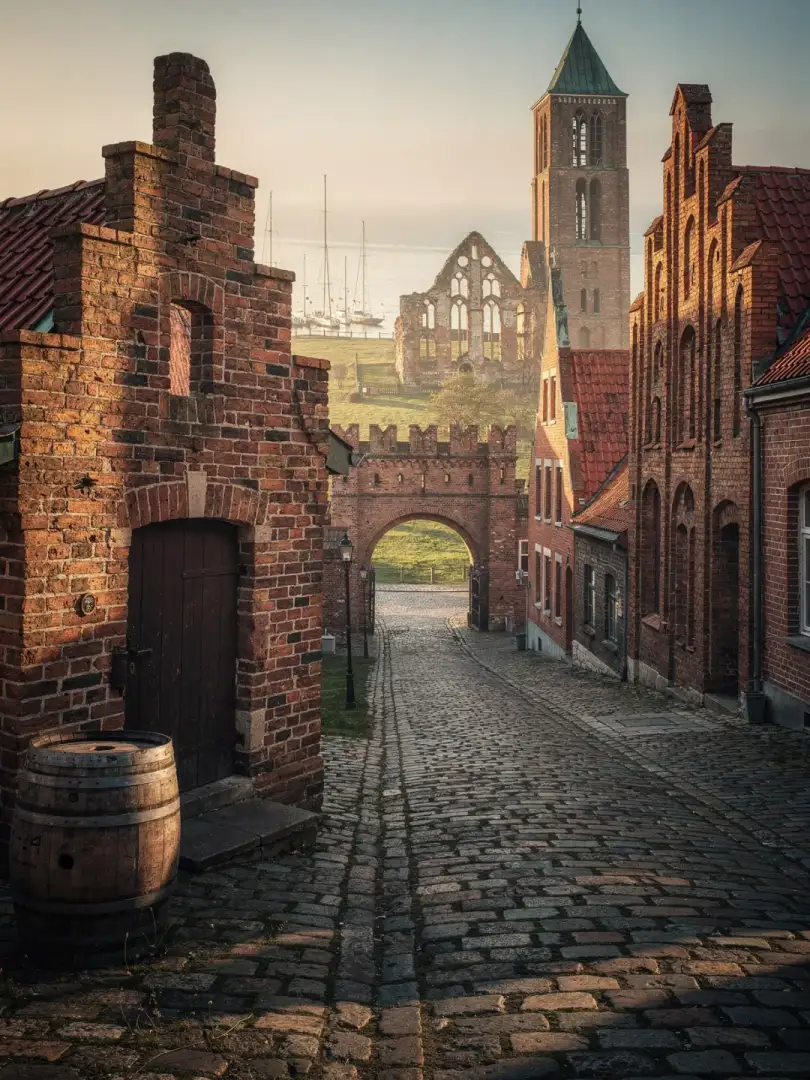
How old is brewing culture in Mecklenburg-Vorpommern? You can see it most clearly in the Hanseatic towns. According to the city of Stralsund, there were already more than 220 brewing rights in the 13th century, each tied to a specific house. Whoever owned such a house was allowed to brew beer or have it brewed. Commercial brewing has also taken place in Rostock since the 13th century.
Then there's the monastic chapter of the story. Cistercian monks from the Danish monastery of Esrom settled in Dargun in 1172 and brewed there, or so the modern-day Darguner Brauerei tells it. That brewery, however, has only existed since May 29, 1991. It was founded by the Danish brewery Harboe as Darguner Klosterbrauerei, and for the first three years, the beer was actually trucked in from Denmark in tankers. So the tradition is more of a revival than an unbroken line.
The breweries we know today date back to the 19th century. Stralsunder Vereinsbrauerei was founded in 1827, August Krüger began brewing in Lübz in 1877, and the Mahn & Ohlerich brewery opened in Rostock in 1878. All three grew alongside the railway and the seaside resorts along the coast.
During GDR times, the Lübzer brewery belonged to the Schwerin beverage combine. It brewed mainly for export to West Germany and, according to Wikipedia, owned the only canning line in the entire GDR.
After 1990, almost all of them changed hands. Lübz went to Holsten and joined Carlsberg along with Holsten in 2005. The Rostock brewery was bought by Beck & Co of Bremen in 1991. In Stralsund, the Nordmann Group from Wildeshausen took over in 1991, and since 2011 the operation has gone by the name Störtebeker Braumanufaktur. There's no EU protected designation of origin for beer from Mecklenburg-Vorpommern, and here, as everywhere, Pils is simply a generic style name rather than a protected term.