Cold Fermentation, Lagering
Yeast & Fermentation
Bottom-fermenting means the yeast sinks to the bottom after fermentation and works at cool temperatures. All of Munich's flagship beers are bottom-fermented: Helles, Dunkel, Festbier and Doppelbock. The yeast belongs to Saccharomyces pastorianus, a hybrid of two yeast species. It ferments at around eight to ten degrees Celsius, noticeably cooler than wheat beer yeast.
Munich yeast made brewing history. In 1845, the Spaten brewery sent yeast to the Carlsberg brewery in Copenhagen. There, in 1883, Emil Christian Hansen succeeded in isolating the first pure culture of bottom-fermenting yeast from it. Munich yeast, in other words, stands behind the lager beer that would later spread around the world.
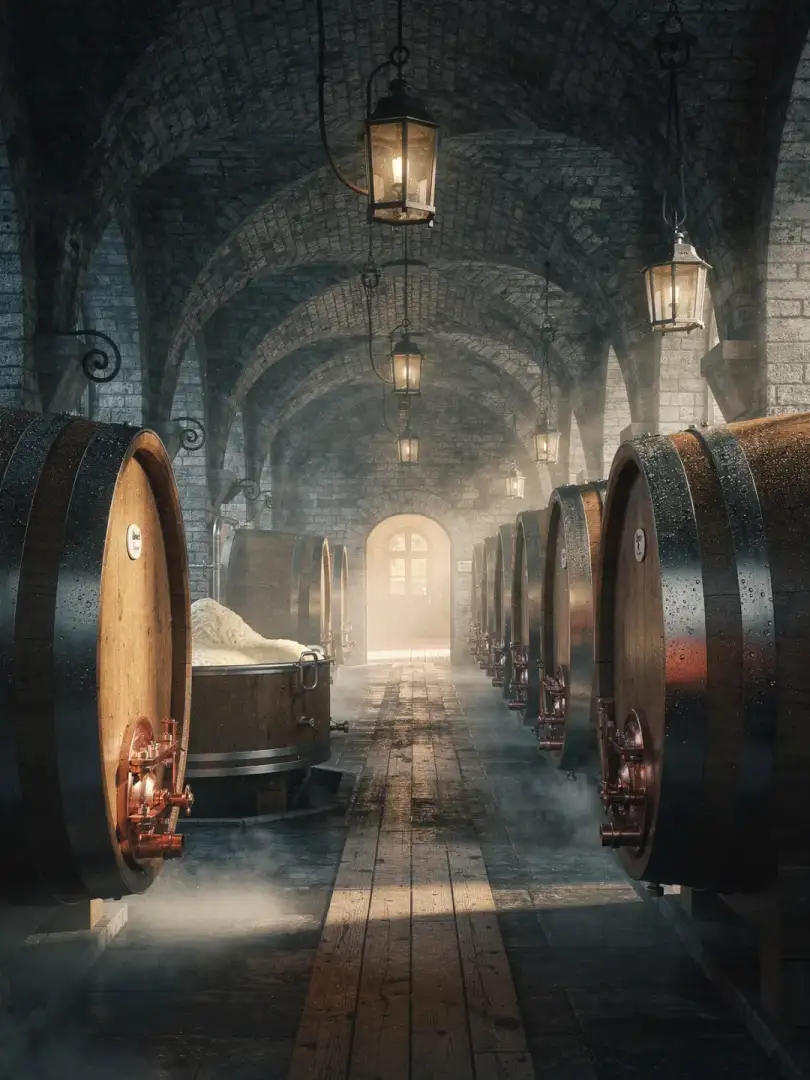
After primary fermentation comes lagering. The beer rests for several weeks at temperatures near freezing, in tank or cellar, until it tastes clear and rounded. A Münchner Hell goes through this process, as does the Festbier that later ends up in a Maß at the Theresienwiese. The longer this rest lasts, the softer the carbonation and yeast notes become. The word 'lager' literally means 'to store.' In the past, this was only possible in winter, until the ice ran out.
Then came the refrigeration machine. Carl von Linde developed it in Munich, and the city's breweries were among the first to adopt artificial cooling in the 1870s. From then on, bottom-fermented beer could be brewed in summer too. The 1553 summer brewing ban lost its purpose as a result, and Munich could offer its beers year-round.